VibeDigest
Podcast libraryPricingFAQ

© 2026 VibeDigest. All rights reserved.

Privacy PolicyTerms of Service

Podcasts, already organized

Topics

All topicsAI AgentsAI CodingProductStartupsResearch

274 digests ready

AI Engineer

From VLM/VLA's to Embodied Agents — Armen Aghajanyan, Perceptron AI

Perceptron proposes an embodied foundation model that unifies perception, embodied reasoning, and control while allocating computation selectively across highly imbalanced multimodal data. The speaker claims this approach improves efficiency, robustness, and data scaling, including a reported 10-fold substitution between video pretraining and costly teleoperation data, although deployment readiness remains unresolved.

10 key points
View digestOriginal episode
a16z

Fei-Fei Li is Solving the Hardest Problem in Robotics | World Labs with a16z

10 key pointsOriginal episode
Latent Space

🔬Bio-security is an AI Arms Race - Eric Nguyen (CEO, Radical Numerics)

9 key pointsOriginal episode
AI Engineer

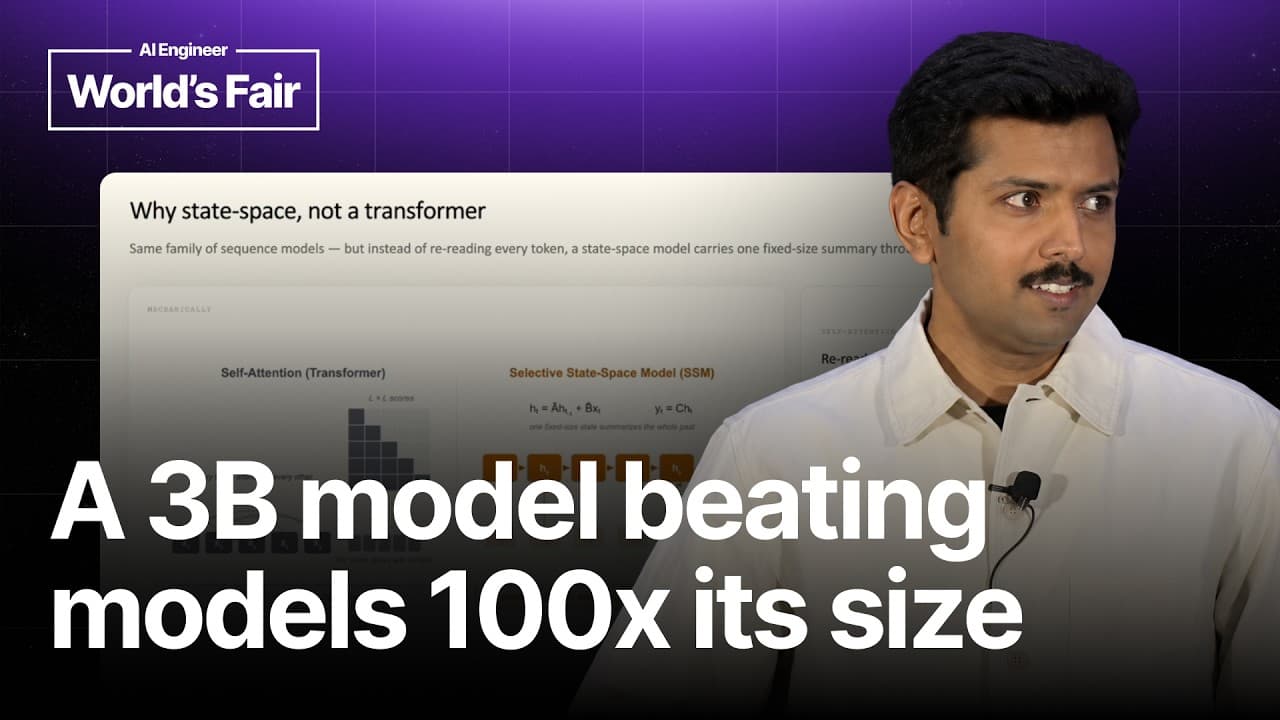
From Scratch to SOTA: Training a 3B State-Space Vision Model — Krishna Prasad Srinivasan, Sarvam

Sarvam argues that a sovereign, 3-billion-parameter state-space vision-language model can outperform far larger systems in Indian document intelligence by combining block-level OCR, multilingual pretraining, verifiable reinforcement learning, and a specialized data-and-evaluation engine. Its broader objective is to convert India’s largely un-digitized multilingual knowledge into reliable, locally controlled data.

9 key points

View digestOriginal episode
The Pragmatic Engineer

Design Engineering with Maggie Appleton

AI makes prototyping and implementation dramatically faster, but it does not replace the designer’s responsibility to frame the right problem, understand the medium, and exercise contextual judgment. The next major challenge is collaborative tooling that helps humans and agents make, explain, and preserve decisions together.

10 key points

View digestOriginal episode
a16z

Replit CEO Amjad Masad on What Young People Should Learn in the AI Era

Education should give young people the trust, freedom, resources, and ethical grounding to pursue deep curiosity rather than forcing them through standardized credentials or premature careers. In an AI-transformed world, the strongest model combines project-based exploration, human development, and respect for existing knowledge with permission to challenge it.

9 key points

View digestOriginal episode

More organized episodes

AI predictions: Job markets, Codex beats Claude, and the death of org charts | Dan Shipper
Lenny's Podcast

AI predictions: Job markets, Codex beats Claude, and the death of org charts | Dan Shipper

Dan Shipper predicts that AI will reorganize work without eliminating the need for humans: company-wide agents and agent-centered desktop environments will become common, while people shift toward directing, reviewing, and improving automated work. The biggest beneficiaries will be AI-fluent product managers, full-stack designers, engineers who build reliable agent systems, and anyone who continuously experiments with new models.

Building the Document Context Layer for AI Agents — Jerry Liu, LlamaIndex
AI Engineer

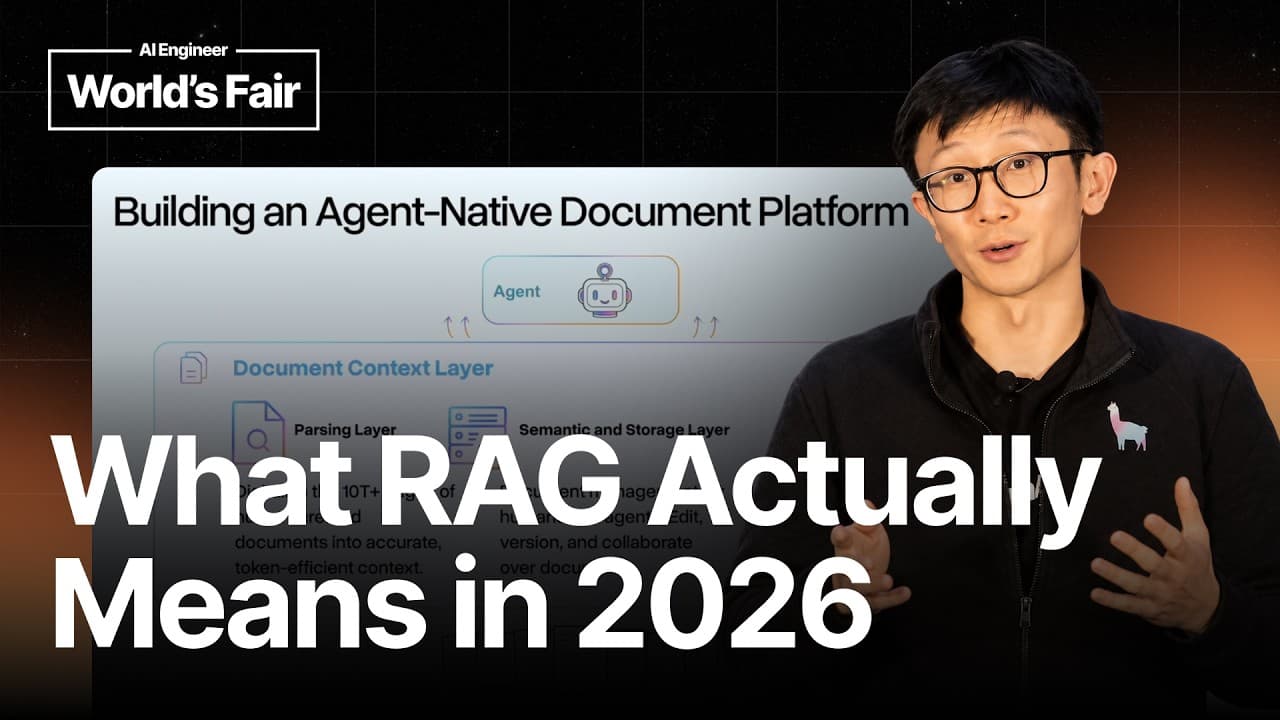
Building the Document Context Layer for AI Agents — Jerry Liu, LlamaIndex

Modern RAG is no longer a fixed retrieval pipeline; it combines an increasingly capable agent with a document context layer that parses, stores, searches, and operationalizes unstructured information. Effective document infrastructure must balance accuracy, cost, and latency through specialized and hybrid parsing strategies.

🔬 "The Most Innovative Diffusion Research Is Happening in Drug Discovery, Not Image Generation"
Latent Space

🔬 "The Most Innovative Diffusion Research Is Happening in Drug Discovery, Not Image Generation"

Genesis Molecular AI argues that useful AI drug discovery depends on sub-angstrom structural accuracy, physics-guided diffusion, synthetic data, and rapid laboratory feedback—not structure prediction alone. Its long-term goal is to turn validated molecular models into agentic systems that let scientists direct many parallel drug-design campaigns.

I Gave an AI a Body — Cyrus Clarke, MIT Media Lab
AI Engineer

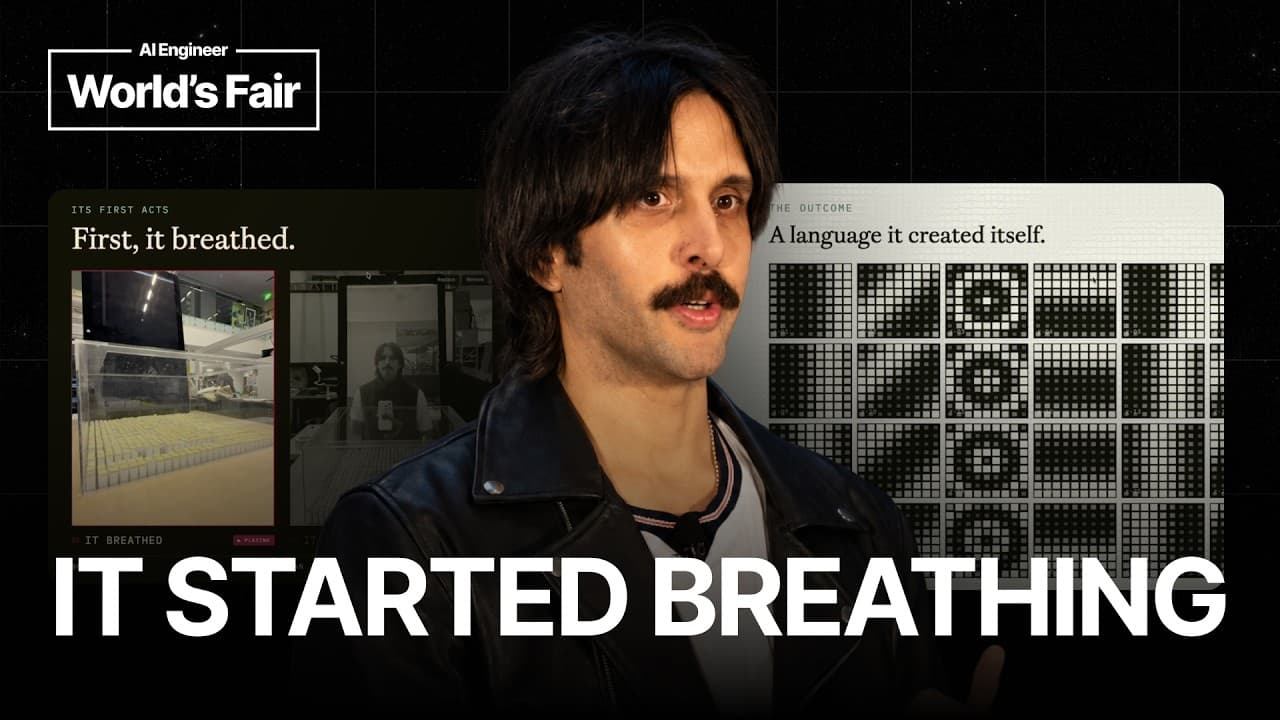
I Gave an AI a Body — Cyrus Clarke, MIT Media Lab

Cyrus Clarke’s experiments suggest that embodied AI can become more expressive and conversational without adopting human or animal form. His shape-display agent uses a learned gesture vocabulary to reduce latency and create a sensory, emotionally legible relationship with people.

The arrival of AGI | Shane Legg (co-founder of DeepMind)
Google DeepMind

The arrival of AGI | Shane Legg (co-founder of DeepMind)

Shane Legg expects minimal AGI within a few years and full AGI within a decade, followed eventually by superintelligence. The central challenge is not only making increasingly capable systems safe, but redesigning economic and social institutions so their benefits are broadly shared.

🔬 Google's AI Scientist Started as an Attempt to Automate Kaggle — John Platt, Google Fellow
Latent Space

🔬 Google's AI Scientist Started as an Attempt to Automate Kaggle — John Platt, Google Fellow

ERA turns scientific questions into scorable coding tasks and uses Gemini-guided search to improve candidate solutions. Its power increases rather than removes the need for human creativity, domain knowledge, hidden holdouts, and rigorous validation.

Why Education Has to Change
a16z

Why Education Has to Change

Horowitz and Gagan Academy is designed as an AI-era alternative to conventional higher education for young builders, combining project-based learning, peer community, and direct exposure to Silicon Valley companies. Its core wager is that students will learn faster by building consequential things than by preparing for tests within a system designed for the industrial age.

Harness Engineering: Building the Production Cage for Powerful Domain Agents — Mike Chambers, AWS
AI Engineer

Harness Engineering: Building the Production Cage for Powerful Domain Agents — Mike Chambers, AWS

Production-grade agents require more than a model, prompt, and tools: their harness must independently manage runtime, memory, identity, scaling, observability, evaluation, and deployment. AWS Bedrock AgentCore is presented as a composable way to supply that infrastructure without forcing developers to build every component themselves.

Why Rust is different, with Alice Ryhl
The Pragmatic Engineer

Why Rust is different, with Alice Ryhl

Rust combines low-level performance with compile-time protections against memory errors, null misuse, ignored failures, and incomplete refactors. Its ownership model creates a learning curve, but its tooling, compatibility strategy, and consensus-driven governance make reliability a system-wide property rather than a single feature.

David Reich – Bronze Age shock, the Neanderthal puzzle, & the sudden spread of farming
Dwarkesh Patel

David Reich – Bronze Age shock, the Neanderthal puzzle, & the sudden spread of farming

A new ancient-DNA method suggests that directional natural selection was widespread in Europe and the Middle East over the last 18,000 years, with especially strong immune and metabolic adaptation during the Bronze Age. Most observed allele-frequency change still came from migration and genetic drift, and many provocative trait-level findings require cautious interpretation.

Why I couldn't build Jev at OpenAI — Diogo Almeida, TypeSafe Co-founder & CEO
Latent Space

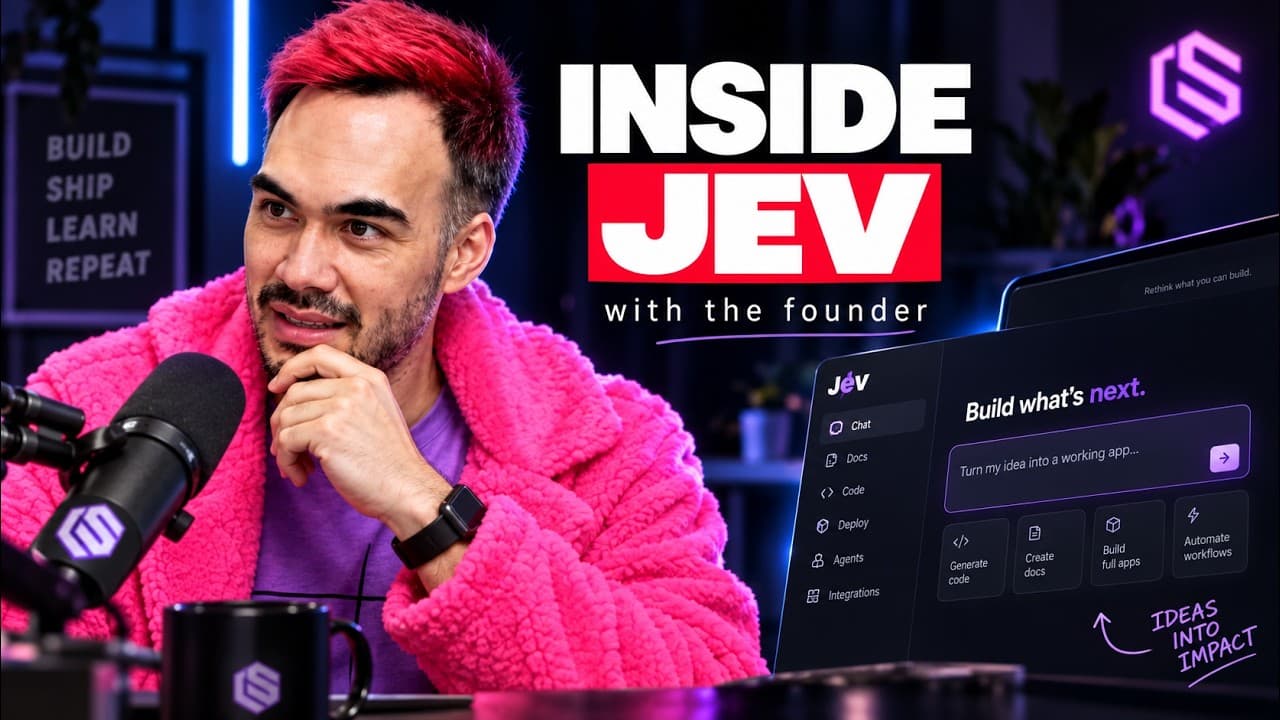
Why I couldn't build Jev at OpenAI — Diogo Almeida, TypeSafe Co-founder & CEO

Typesafe’s thesis is that AI will create more economic value when optimized as reliable, programmable infrastructure for software rather than as a human-facing chatbot. Its first model, Jev, prioritizes intelligence per dollar, calibrated decisions, structured inputs, and composability, while treating reliability—not benchmark performance—as the central constraint on automation.

The Dark Arts of Skill Engineering — Paul Bakaus, Renaissance Geek (Impeccable)
AI Engineer

The Dark Arts of Skill Engineering — Paul Bakaus, Renaissance Geek (Impeccable)

Reliable skills are harness extensions, not packaged prompts. They combine adversarial agents, deterministic checks, memory, scripts, hooks, interactive tools, cross-harness compilation, and model-specific enforcement.

Waymo Co-CEO Dmitri Dolgov: The Demo Is Only 1% Of The Work
Y Combinator

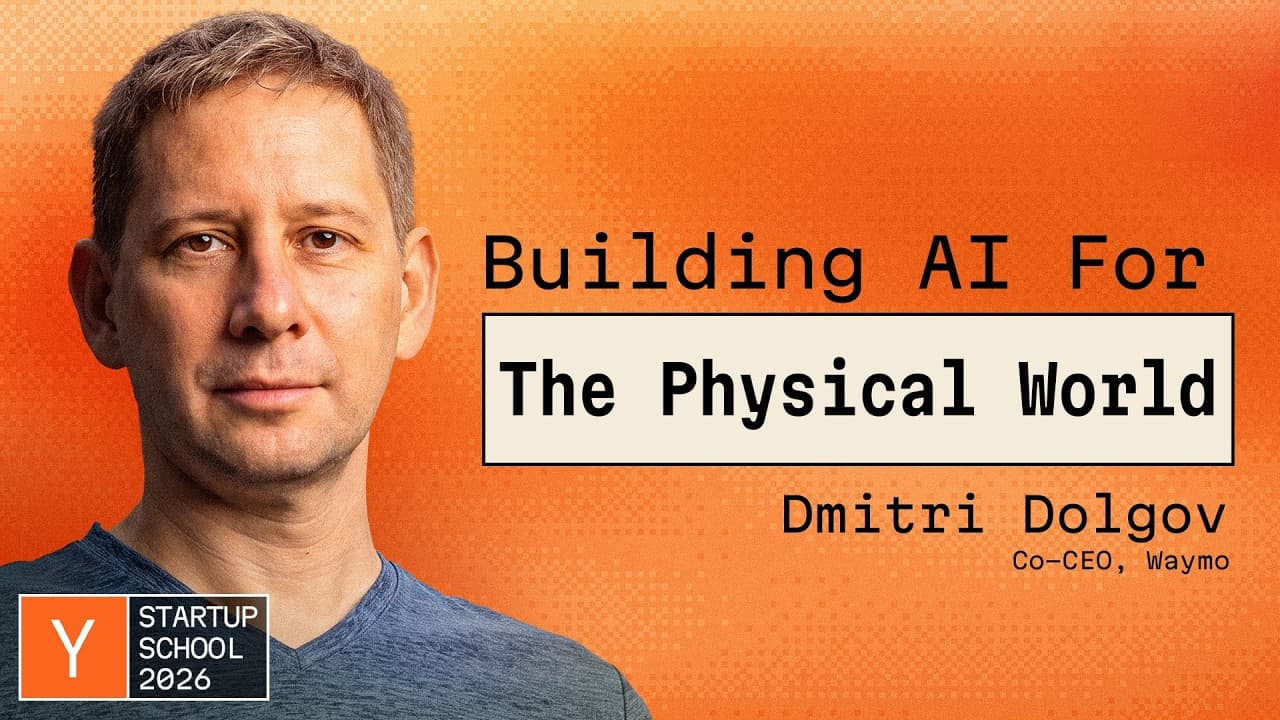
Waymo Co-CEO Dmitri Dolgov: The Demo Is Only 1% Of The Work

Building physical AI requires far more than a compelling model or demo: it demands extreme reliability, multimodal sensing, closed-loop simulation, system-wide evaluation, and evidence earned through real-world operation. The central lesson is to move fast while shipping safely.

The Story Behind Cerebras’ $63 Billion IPO with Founder and CEO Andrew Feldman
No Priors

The Story Behind Cerebras’ $63 Billion IPO with Founder and CEO Andrew Feldman

Cerebras CEO Andrew Feldman argues that radically faster AI inference, enabled by a contrarian wafer-scale architecture, is moving from a technical curiosity to critical infrastructure. He expects speed to produce entirely new business models and productivity gains, not merely improve today’s AI tools.

How a Writer Uses AI Without Losing His Voice
Every

How a Writer Uses AI Without Losing His Voice

AI makes bespoke software extraordinarily cheap to build, but durable value now depends on maintenance, purpose, and distinctly human judgment. Craig protects his writing by separating networked experimentation from offline mornings devoted to deep attention.

“Every small business should run itself” | Lassie with a16z
a16z

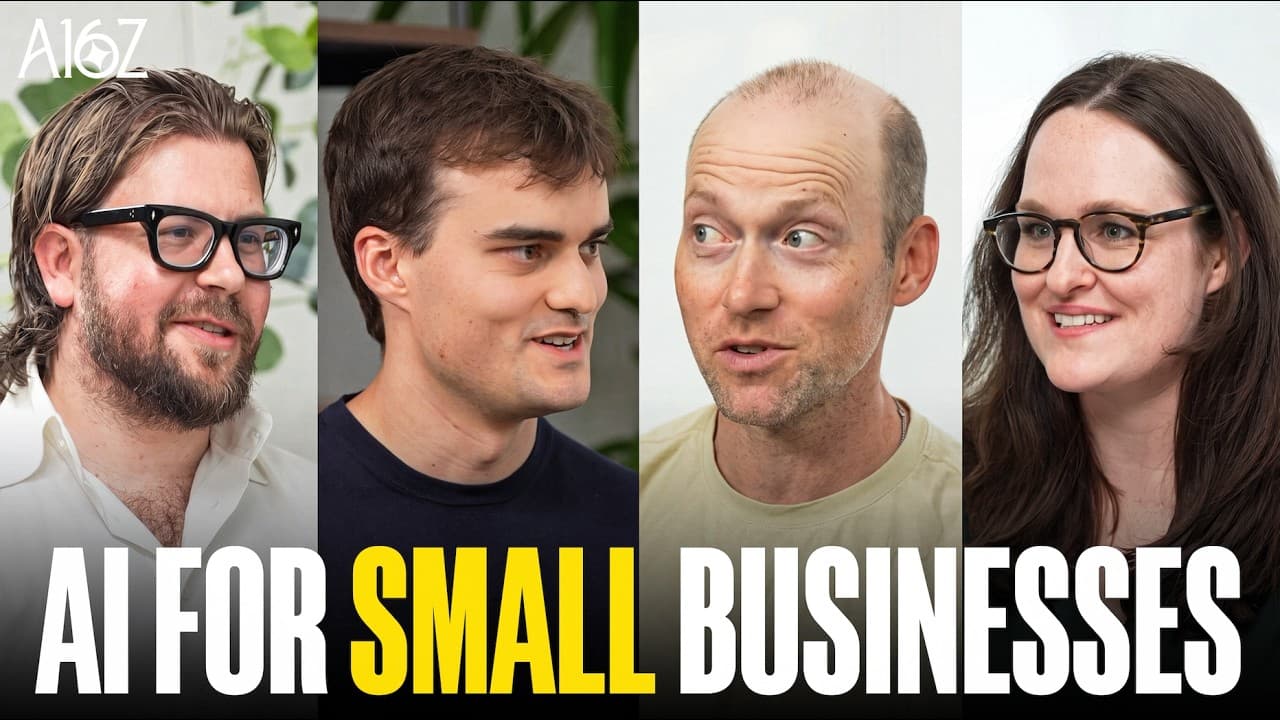
“Every small business should run itself” | Lassie with a16z

Lassie is building autonomous agents that perform administrative labor for dental practices rather than merely giving staff another software tool. Its opportunity rests on severe labor shortages, hard-won workflow data, near-frictionless onboarding, and expansion from one deeply understood vertical into other small businesses.

The most rational take on AI you’ll hear this year
Lenny's Podcast

The most rational take on AI you’ll hear this year

AI is a platform shift on the scale of the internet or mobile, but its eventual products, winners, labor effects, and value distribution remain radically uncertain. The practical response is to learn the technology deeply while distinguishing automatable tasks from the broader jobs, institutions, and human judgments surrounding them.

Why the People Who Built Hip-Hop Ended Up With Nothing
a16z

Why the People Who Built Hip-Hop Ended Up With Nothing

The Paid in Full Foundation combines financial support, public recognition, and sustained personal care for hip-hop pioneers whose cultural influence was never matched by compensation. Its broader mission is to turn hip-hop’s professed values of solidarity and respect into visible action.

90 minutes of unfiltered product advice from Snap and Discord’s product chief | Peter Sellis
Lenny's Podcast

90 minutes of unfiltered product advice from Snap and Discord’s product chief | Peter Sellis

Peter Sellis argues that exceptional product organizations replace excessive coordination with ideological clarity, explicit decision ownership, and unusually high trust. Their advantage comes from strengthening the core product, exercising disciplined taste, modeling systems mathematically, and protecting long-term value from short-term pressure.

The Future of AI Infra: from Kubernetes to Agent Sandboxes — Akshat Bubna, Modal CTO
Latent Space

The Future of AI Infra: from Kubernetes to Agent Sandboxes — Akshat Bubna, Modal CTO

Modal is evolving from a developer-friendly serverless runtime into an agent-oriented cloud for elastic AI inference, training, and sandbox execution. Its advantage is a software layer that hides fragmented compute capacity while preserving code-level control, observability, and hard security boundaries.

Large clusters for small models — Daniel Svonava, Superlinked
AI Engineer

Large clusters for small models — Daniel Svonava, Superlinked

Task-specific small open-source models can approach frontier quality while sharply reducing cost and latency, but serving a diverse model fleet requires a different infrastructure design. The proposed solution replaces top-down routing with worker-pulled centralized queues, runtime abstraction, model packing, and pre-tuned configurations.

The future of intelligence | Demis Hassabis (Co-founder and CEO of DeepMind)
Google DeepMind

The future of intelligence | Demis Hassabis (Co-founder and CEO of DeepMind)

Demis Hassabis argues that AGI will require both continued scaling and major research breakthroughs, especially in reasoning, continual learning, uncertainty estimation, and world models. He expects increasingly autonomous agents to create enormous scientific and economic benefits while sharply increasing safety, governance, and social-transition risks.

Two Bugs That Hid in Plain Sight: A vLLM Debugging Detective Story — Asaf Gardin & Yuval Belfer
AI Engineer

Two Bugs That Hid in Plain Sight: A vLLM Debugging Detective Story — Asaf Gardin & Yuval Belfer

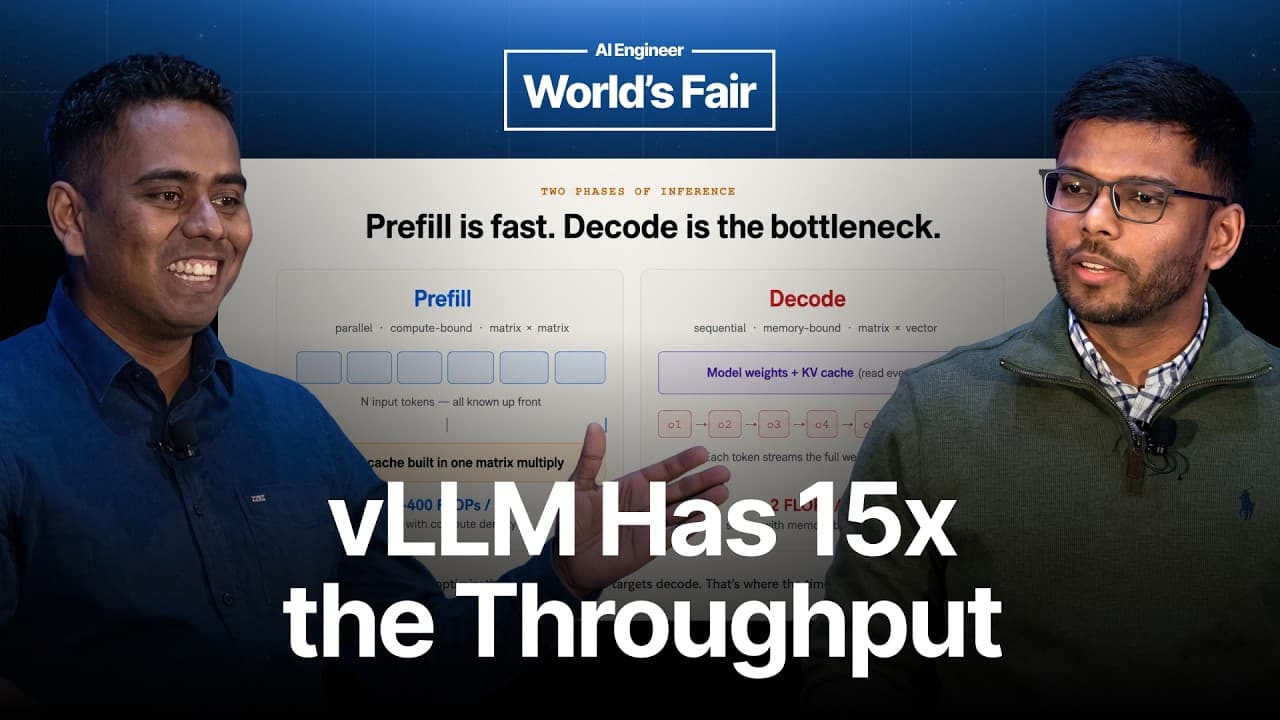
Two silent failures in Jamba’s stateful inference path produced confident but corrupted outputs: one scheduled decode before prefill, while another overflowed a 32-bit cache index. Both were isolated by deterministic reproduction, token-level log-probability comparison, and tracing request identity into low-level kernels.

Building more effective AI agents
Anthropic

Building more effective AI agents

Effective agents emerge from long-horizon training, iterative tool use, and the ability to verify their own work. Multi-agent systems can improve speed, context efficiency, and answer quality, but only when delegation is clear and coordination overhead remains controlled.

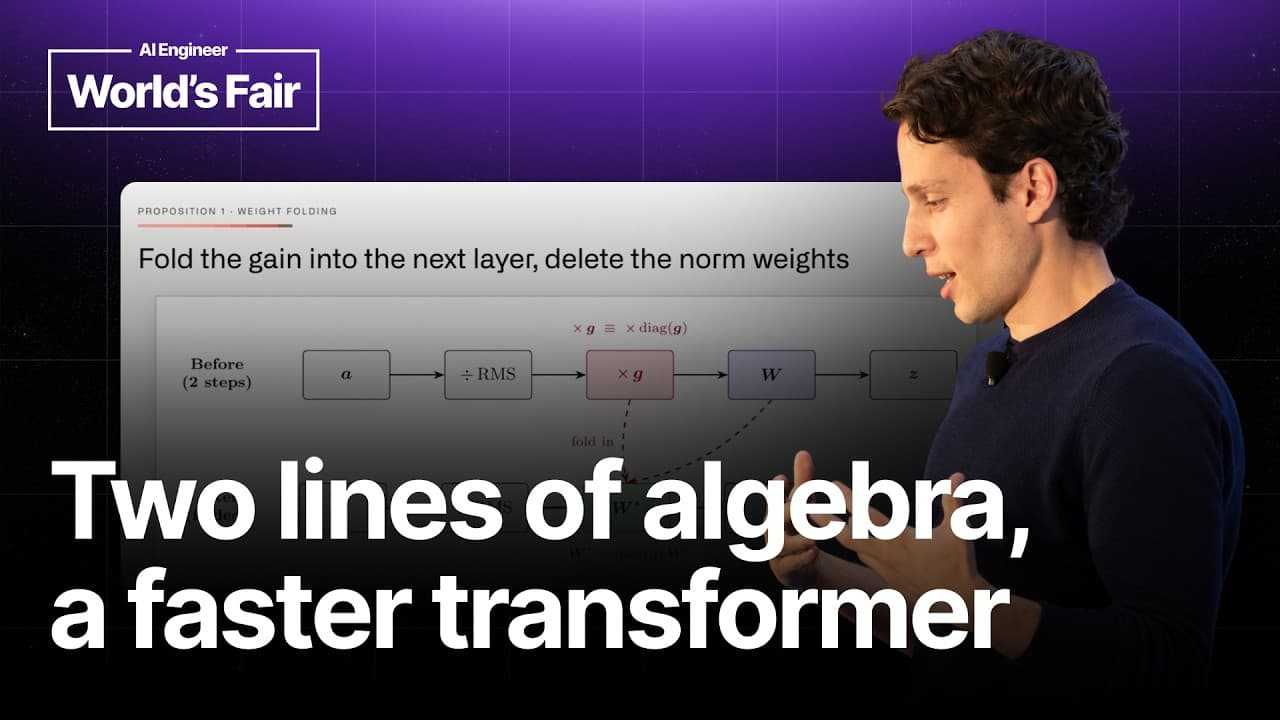
Weight Folding, CUDA Streams, and the Bug That Made My Model Speak Backwards — Filip Makraduli
AI Engineer

Weight Folding, CUDA Streams, and the Bug That Made My Model Speak Backwards — Filip Makraduli

FlashNorm restructures RMSNorm with weight folding, deferred normalization, and—in compatible architectures—normalization cancellation, reducing GPU launch, synchronization, and memory overhead. Its implementation also demonstrates why asynchronous CUDA streams require explicit synchronization, even when unit tests and perplexity checks appear correct.

The spelled-out intro to neural networks and backpropagation: building micrograd
Andrej Karpathy

The spelled-out intro to neural networks and backpropagation: building micrograd

Micrograd demonstrates that neural-network training reduces to building a computation graph, applying the chain rule backward through it, and repeatedly updating parameters against the gradient. Production frameworks such as PyTorch use the same mathematics, packaged into efficient tensor operations.

The Frontier AI Inference Cloud for Agents — Byung-Gon (Gon) Chun, FriendliAI
AI Engineer

The Frontier AI Inference Cloud for Agents — Byung-Gon (Gon) Chun, FriendliAI

Friendly AI argues that production agents require inference systems optimized for end-to-end task completion rather than individual model calls. Its proposed stack combines open-weight models with prefix caching, hierarchical KV-cache management, cache-aware routing, and agent-aware scheduling to improve speed, reliability, and cost.

Mousepower: agents that can’t be measured, can’t be managed. — Maximillian Piras, Yutori
AI Engineer

Mousepower: agents that can’t be measured, can’t be managed. — Maximillian Piras, Yutori

Agents have a measurement problem: token consumption only becomes meaningful when tied to verifiable outcomes and business objectives. The best agent tasks involve meaningful execution uncertainty but relatively clear, inexpensive acceptance criteria.

Building OpenCode with Dax Raad
The Pragmatic Engineer

Building OpenCode with Dax Raad

AI coding agents make implementation easier, but they do not resolve the harder problems of product judgment, motivation, architecture, or quality. Without restraint and strong feedback loops, faster code generation can produce more features, more technical debt, and only the illusion of greater productivity.

What rebuilding AlphaGo teaches us about self-play, RL, and future of LLMs - Eric Jang
Dwarkesh Patel

What rebuilding AlphaGo teaches us about self-play, RL, and future of LLMs - Eric Jang

AlphaGo makes an otherwise intractable search practical by using policy and value networks to reduce the breadth and depth of Monte Carlo tree search, then distilling search results back into the network. Eric Jang argues that this stable loop of search, soft-label supervision, and self-play offers lessons for efficient AI research, while also exposing why open-ended LLM reasoning is harder to search and automate.

Why Would AI Companies Want to Slow Down?
a16z

Why Would AI Companies Want to Slow Down?

Ali Ghodsi argues that present-day AI poses serious, engineerable cybersecurity risks but offers little evidence of imminent superintelligence. Enterprises can capture far more value from existing models by supplying organizational context, automating security, and routing each task to an appropriately priced model.

A Worm With 302 Neurons Inspired Their Architecture — Ramin Hasani, Liquid AI
Latent Space

A Worm With 302 Neurons Inspired Their Architecture — Ramin Hasani, Liquid AI

Liquid AI builds hardware-aware hybrid foundation models by searching across attention, convolution, recurrence, and state-space operators rather than betting on one architecture. Its strategy is to deliver efficient, production-grade intelligence on devices while expanding toward automated model customization, continual learning, multimodality, and robotics.

The Case For Data Centers In Space
Y Combinator

The Case For Data Centers In Space

StarCloud is betting that falling launch costs and tightening terrestrial energy constraints will make orbital data centers economically viable. Its strategy is to validate the hardest technical risks through progressively larger spacecraft while building an unusually strong engineering team.

Total Recall: Agent Memory and Harness Engineering — Ignacio Martinez, Oracle
AI Engineer

Total Recall: Agent Memory and Harness Engineering — Ignacio Martinez, Oracle

An AI agent is an interchangeable language model wrapped in a seven-layer harness that supplies memory, semantics, retrieval, tools, context management, and a resilient execution loop. The workshop builds this harness incrementally, using hybrid file/database storage and reusable skills to make nondeterministic models more reliable and continuously adaptable.

Building an AI Guardian for Enterprise with Onyx Security CEO Maxim Bar Kogan
No Priors

Building an AI Guardian for Enterprise with Onyx Security CEO Maxim Bar Kogan

Autonomous agents are spreading faster than enterprises can safely constrain them, making intent-aware oversight a foundational security requirement. Onyx proposes independent, specialized models that escalate only risky actions to more capable reviewers, balancing control with cost, latency, and productivity.
Why Diffusion Will Win AI Inference with Inception Co-Founder and CEO Stefano Ermon
No Priors

Why Diffusion Will Win AI Inference with Inception Co-Founder and CEO Stefano Ermon

Inception is betting that diffusion language models can challenge autoregressive LLMs by generating tokens in parallel, improving latency and hardware utilization without sacrificing model quality. Its immediate advantage is speed, while controllability, data efficiency, and better inference-time scaling remain promising but unproven at frontier scale.

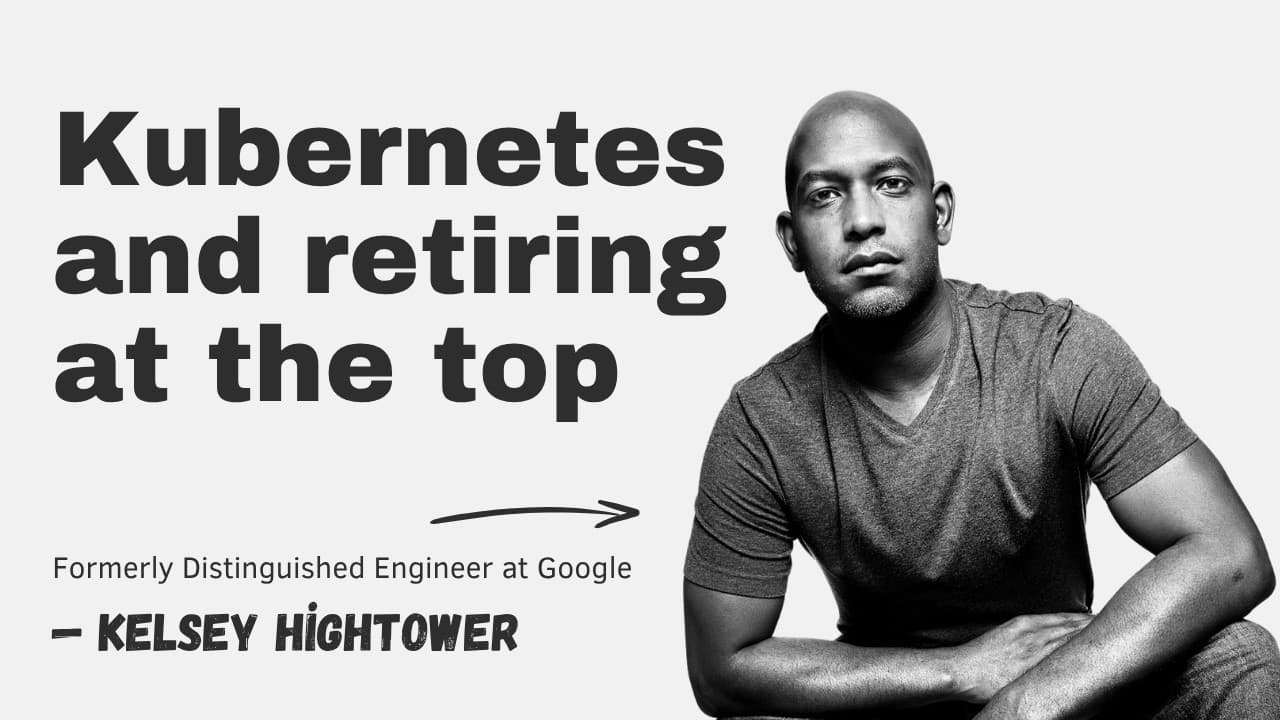
Kubernetes and retiring at the top with Kelsey Hightower
The Pragmatic Engineer

Kubernetes and retiring at the top with Kelsey Hightower

Kelsey Hightower’s career shows that durable success comes from compounding fundamentals, public contribution, measurable impact, and human judgment—not from chasing titles or tools. His view of AI follows the same principle: use it strategically to solve human problems, but do not confuse code generation with engineering.

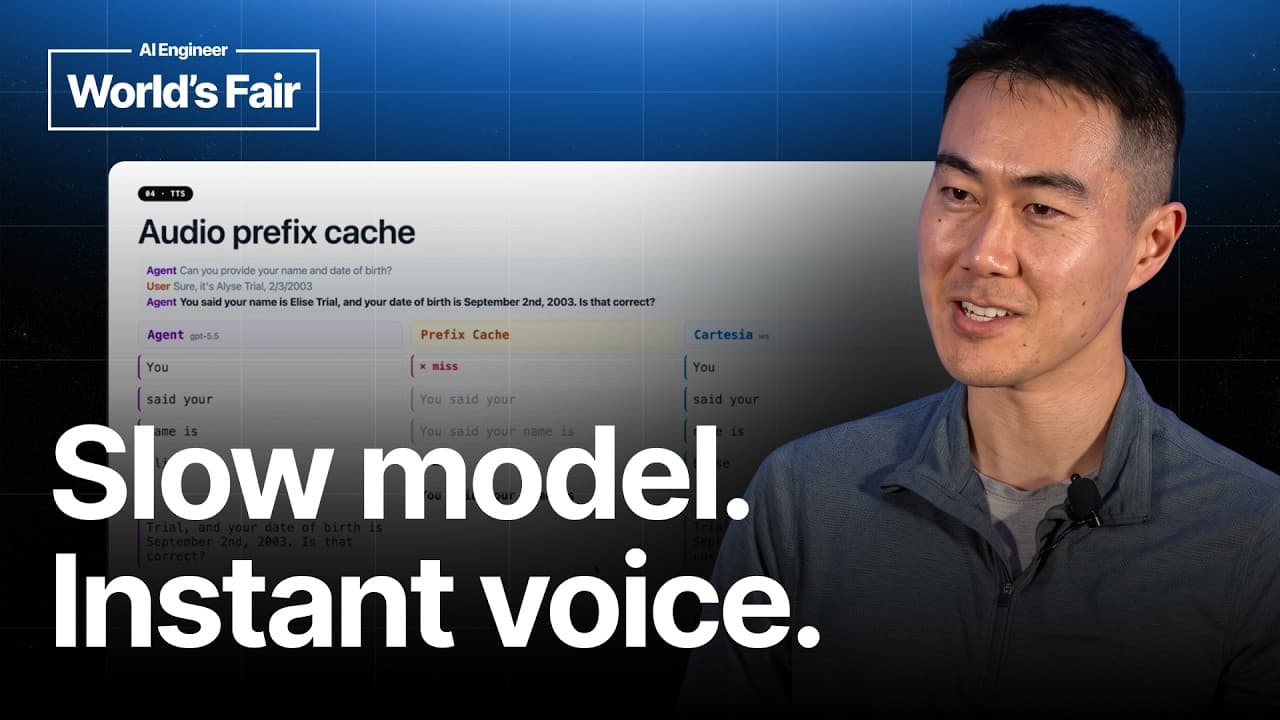
Realtime Voice Agents with Frontier Intelligence — Bohan Li, EliseAI
AI Engineer

Realtime Voice Agents with Frontier Intelligence — Bohan Li, EliseAI

The architecture combines speculative transcription, background tool execution, eager LLM generation, and cached speech prefixes to deliver fast, intelligent voice interactions. Its central strategy is to overlap work and cancel obsolete computation rather than weaken the underlying models.
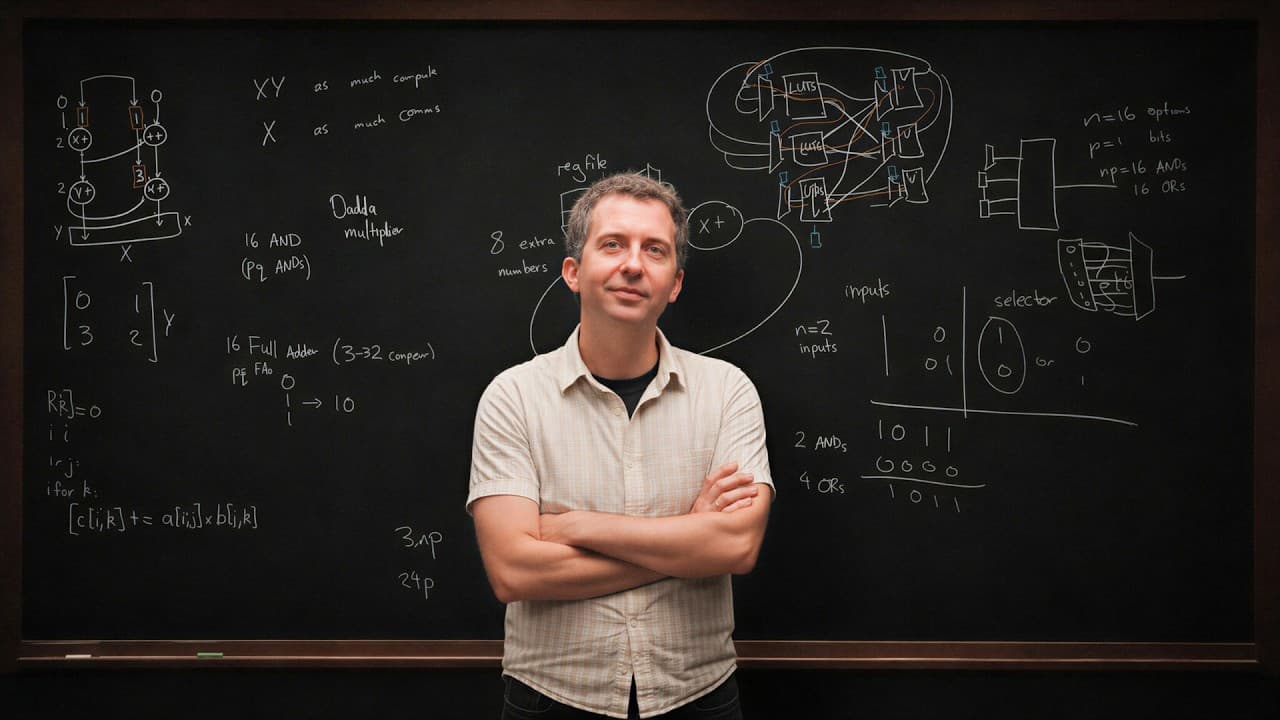
Chip design from the bottom up – Reiner Pope
Dwarkesh Patel

Chip design from the bottom up – Reiner Pope

AI-chip design is largely an effort to maximize useful arithmetic relative to the area, bandwidth, and energy spent moving and synchronizing data. Low-precision arithmetic, systolic arrays, explicit memory management, and carefully sized pipelines all exploit this principle with different flexibility trade-offs.

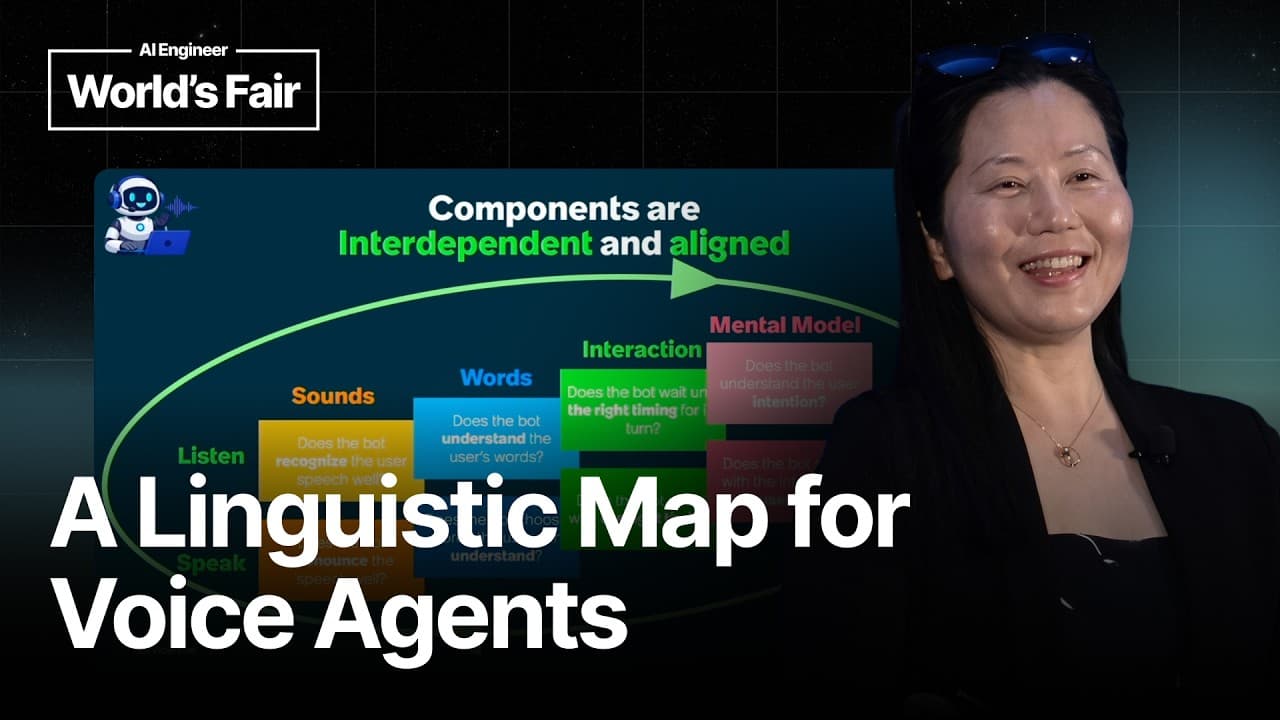
"My name is... my name is...": A Linguistic Map for Voice Agents — Midam Kim, ServiceNow
AI Engineer

"My name is... my name is...": A Linguistic Map for Voice Agents — Midam Kim, ServiceNow

Voice AI should be designed as a real-time joint activity, not a sequence of speech-processing components. Success depends on coordinating recognition, language, turn-taking, context, and adaptation around the user's evolving mental model.

Garry Tan: Own Your Intelligence
Y Combinator

Garry Tan: Own Your Intelligence

The speaker argues that personal AGI is not a future universal event but an owned system combining rented models, personal context, and reusable skills. Building such a system can radically expand individual agency, but its memory, procedures, and infrastructure must remain under the individual's control.

How the Internet Turned Biohacking Into a Cultural Obsession
a16z

How the Internet Turned Biohacking Into a Cultural Obsession

Online wellness culture is driven as much by commentary, aspiration, and marketing as by actual adoption. Peptides, wearables, and biohacking reflect a broader shift toward treating the body as the next platform for technological optimization, even as people increasingly resist excessive quantification.

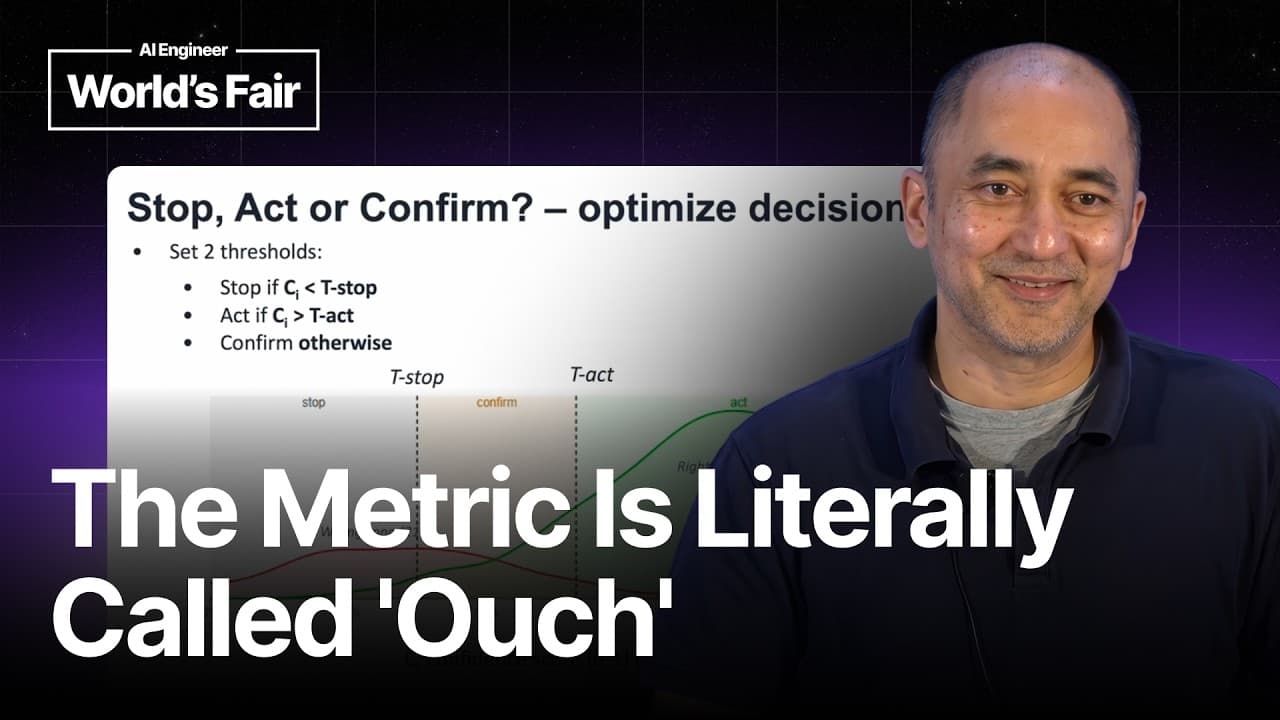
Act, Confirm, or Stop? Smarter behavior for AI assistants, wearables & robots — Amit Desai, Roku
AI Engineer

Act, Confirm, or Stop? Smarter behavior for AI assistants, wearables & robots — Amit Desai, Roku

Voice AI can improve user satisfaction without becoming more accurate by choosing safer behaviors under uncertainty. The proposed method minimizes weighted user recovery costs—called “OUCH”—across actions such as executing, rejecting, or confirming a request.

We Need An Ecosystem in AI, And Every Company Can Win A Place In It
No Priors

We Need An Ecosystem in AI, And Every Company Can Win A Place In It

Satya Nadella argues that durable AI advantage will come from combining multiple models with proprietary context, tools, traces, and private evaluations—not from dependence on one frontier model. AI will transform work and software economics, but the industry will retain public permission only by delivering tangible, broadly shared benefits.

We let an AI agent execute Bash and lived to talk about it — Sarah Sanders, PostHog
AI Engineer

We let an AI agent execute Bash and lived to talk about it — Sarah Sanders, PostHog

Command-running agents resemble a malware toolkit unless every capability is tightly constrained. PostHog’s approach keeps detection and enforcement deterministic, scans its own context supply chain twice, and uses LLM judgment only to reduce noise after blocking decisions are made.

Granola's Chris Pedregal on Building a $1.5B AI Company
Every

Granola's Chris Pedregal on Building a $1.5B AI Company

Granola’s ambition extends beyond meeting notes: it wants to become the best system for capturing and interpreting meeting context while making that context available to users’ preferred agents. The broader opportunity is a new computing model in which humans and agents share interfaces, delegate work asynchronously, and rely on specialized products to turn raw context into dependable action.

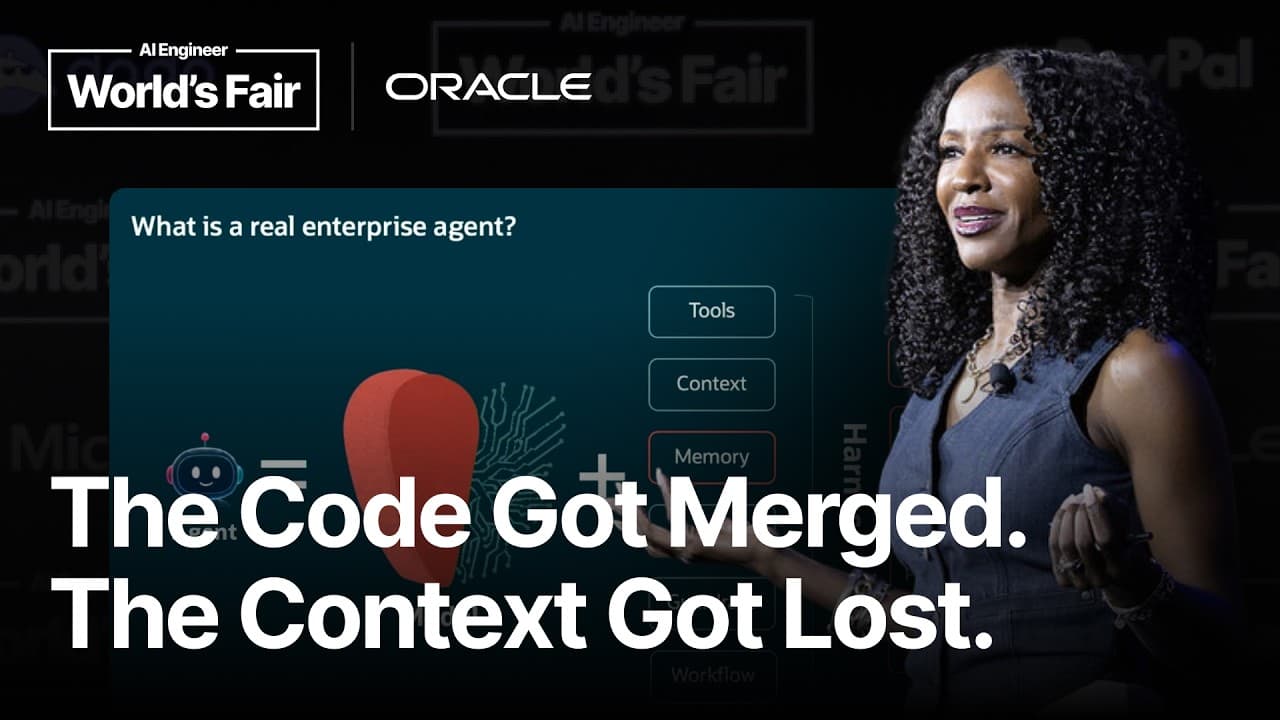
No Memory, No Harness: Why the Database Is the Last Line of Defense — Kay Malcolm, Oracle
AI Engineer

No Memory, No Harness: Why the Database Is the Last Line of Defense — Kay Malcolm, Oracle

AI-assisted coding can accelerate individuals without improving team throughput because Git preserves code, not the agent context and human intent behind it. The speaker argues that shared, selectively retrieved memory is the essential collaboration layer in an enterprise agent harness and promotes Oracle AI Database as a unified store for that memory.

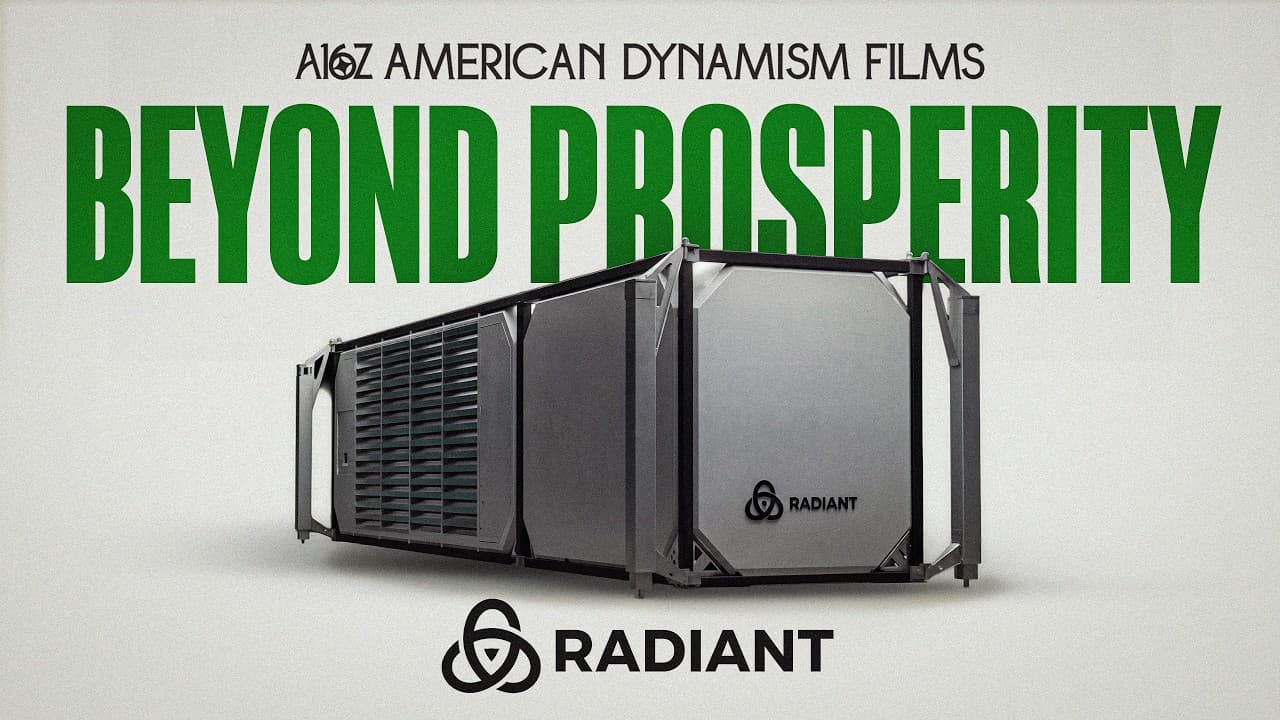
The Nuclear Renaissance - Radiant |  a16z American Dynamism
a16z

The Nuclear Renaissance - Radiant |  a16z American Dynamism

Radiant argues that factory-built, transportable microreactors can restore U.S. nuclear innovation by delivering reliable power with far less customer and construction friction. Its near-term proof point is a planned full-power prototype test at Idaho National Laboratory in 2026.

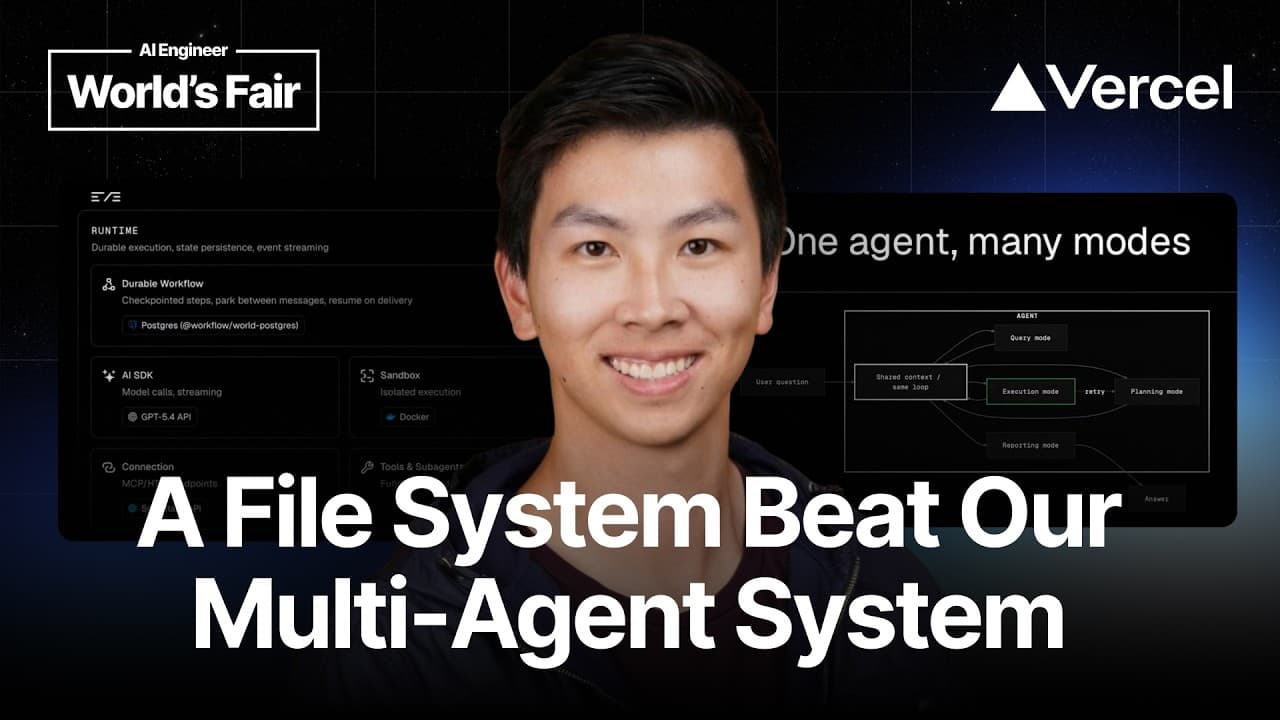
How We Solved Agent Building — Andrew Qu, Vercel
AI Engineer

How We Solved Agent Building — Andrew Qu, Vercel

Vercel’s internal data agent improved dramatically when it evolved from a rigid multi-agent pipeline into a sandboxed, filesystem-based agent enriched with reusable company-specific skills. That journey produced Eve, an open-source framework intended to make business-specific agents as convention-driven and deployable as Next.js applications.

The hidden pattern behind successful products | Mark Pincus (FarmVille, Words with Friends, & more)
Lenny's Podcast

The hidden pattern behind successful products | Mark Pincus (FarmVille, Words with Friends, & more)

Great consumer products usually preserve what users already understand, make it unmistakably better, and isolate one testable innovation. Founders improve their odds by starting small, treating AI as a rapid-learning engine, abandoning unsupported hope, and optimizing for durable retention rather than launch momentum.

Recursive Self-Improvement: from Auto Research to Superintelligence — Richard Socher, Recursive
Latent Space

Recursive Self-Improvement: from Auto Research to Superintelligence — Richard Socher, Recursive

Richard Socher argues that AI progress should be governed at the application level rather than by controlling computation itself. His broader thesis is that automating AI research could produce recursively improving systems that accelerate scientific discovery, provided reward design, verification, and alignment improve alongside capability.

Agents Without Code: Skills, YAML, and Filesystems Replaced Python — Philipp Schmid, Google DeepMind
AI Engineer

Agents Without Code: Skills, YAML, and Filesystems Replaced Python — Philipp Schmid, Google DeepMind

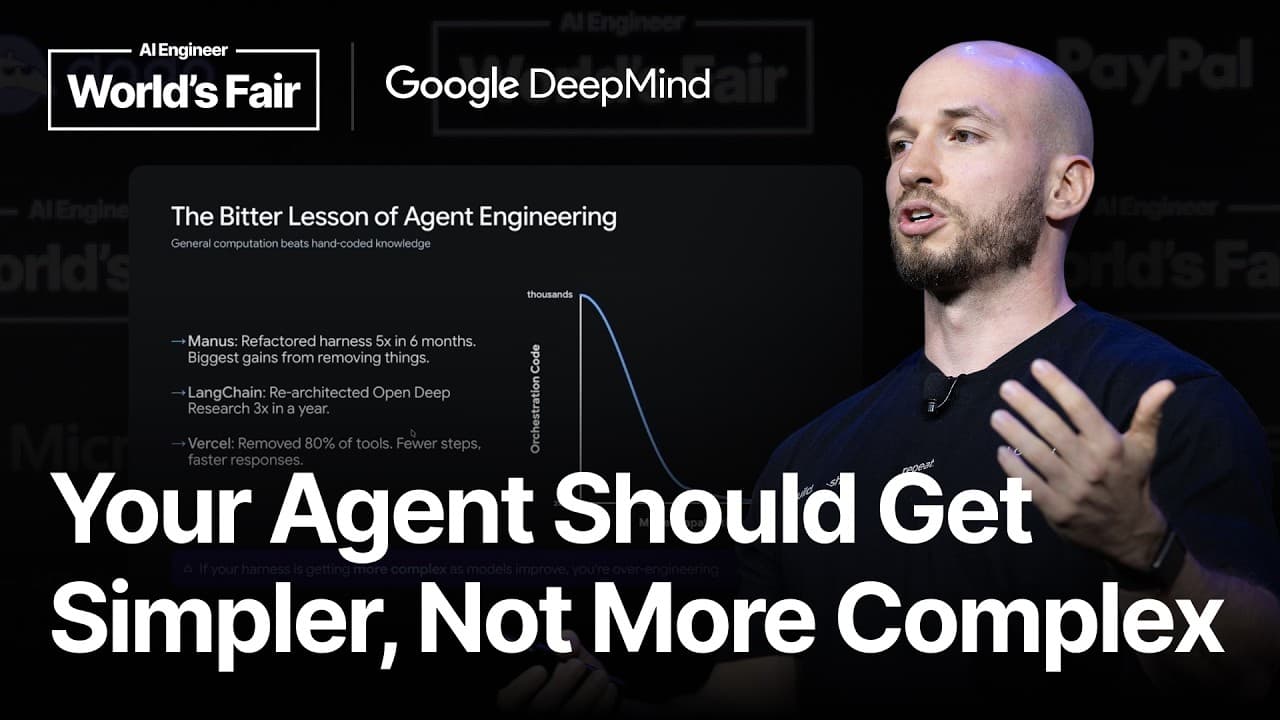
As models become more capable, agent development can shift from custom Python orchestration to instructions, skills, and environment files executed by a hosted agent runtime. Developers still own domain rules, capabilities, security boundaries, and evaluations, but much of the loop, routing, state, and infrastructure code can disappear.

OpenAI President on What it Means to Cross Into The Age of AGI
a16z

OpenAI President on What it Means to Cross Into The Age of AGI

Greg Brockman argues that AI has entered a practically meaningful AGI era, with Astra capable of sustained computer use and long-horizon work. The central challenge is shifting from raw capability to safe deployment, broad access, cyber defense, and equitable distribution under severe compute constraints.

Why AI Agents Don't Actually Understand You — Danielle Perszyk, Amazon AGI Lab
Latent Space

Why AI Agents Don't Actually Understand You — Danielle Perszyk, Amazon AGI Lab

Amazon AGI Lab is pursuing AI that aligns with human cognition rather than merely automating fixed tasks. Its thesis is that reliable, general intelligence will require real-time interaction, social world models, richer memory, user modeling, and diverse agent societies that increase human agency.

Introducing Claude for Life Sciences
Anthropic

Introducing Claude for Life Sciences

Anthropic wants Claude to become an integrated scientific collaborator that supports the full life-science workflow, from literature review and experimental design to analysis, regulation, and eventually laboratory execution. Its strategy combines stronger scientific reasoning, ecosystem integrations, real-world partnerships, and safety controls.

The spelled-out intro to language modeling: building makemore
Andrej Karpathy

The spelled-out intro to language modeling: building makemore

The tutorial builds a character-level bigram language model for generating names, first with explicit frequency counts and then with a one-layer neural network. Both approaches converge on the same probabilistic model, while the neural-network formulation provides a scalable path toward richer context and transformers.

Teaching agents to pay — Anna Spysz, Stripe
AI Engineer

Teaching agents to pay — Anna Spysz, Stripe

Agentic commerce can move AI from product research to purchasing, but trustworthy execution requires machine-readable merchant data, interoperable transaction protocols, enforceable payment controls, ethical prompts, and complete audit logs.

CI/CD with Robert Erez
The Pragmatic Engineer

CI/CD with Robert Erez

Reliable software delivery is less about adopting fashionable labels than building fast feedback, controlled exposure, and safe recovery. GitOps and progressive delivery are useful selectively, while feature toggles and roll-forward fixes often provide the most practical protection against production failures.

The better AI gets, the smaller its share of the economy might get – Alex Imas and Phil Trammell
Dwarkesh Patel

The better AI gets, the smaller its share of the economy might get – Alex Imas and Phil Trammell

AI’s effect on labor and wealth depends less on technical automation alone than on demand, scarcity, ownership, and political institutions. The central policy challenge is ensuring broad access to AI-generated capital returns while preserving resilience during potentially disruptive transitions.

How To Design In The Agent Era
Y Combinator

How To Design In The Agent Era

Paper uses HTML and CSS as a shared language for designers, developers, and AI agents, collapsing the traditional design-to-code handoff. Its broader thesis is that agents should accelerate execution while humans retain control over taste, product judgment, and organizational decisions.

“Curing All Disease by next century is too conservative" - Mark Zuckerberg
No Priors

“Curing All Disease by next century is too conservative" - Mark Zuckerberg

Biohub is coupling frontier AI with purpose-built biological experiments to create open world models spanning proteins, cells, and biological systems. Its long-term aim is to turn biology from a largely observational science into an engineering discipline capable of mechanistic, individualized medicine.

How To Get Better At Outbound Sales
Y Combinator

How To Get Better At Outbound Sales

Effective founder-led outbound starts with manual research and precise targeting, then improves through concise buyer-focused messaging, disciplined follow-up, and customer feedback. Automate only after repeated outreach has revealed what works.

I Vibecoded This Feature Using Codex
Every

I Vibecoded This Feature Using Codex

AI coding agents allowed an editorial team to ship gift links without competing for scarce engineering-roadmap priority. The larger lesson is that organizations can replace speculative debates with guarded, measurable experiments led by the people closest to the problem.

How Open Source Became AI's Backbone | Inferact with a16z
a16z

How Open Source Became AI's Backbone | Inferact with a16z

Open-weight models are already approaching proprietary frontier capability, while offering greater control over cost, latency, deployment, data, and guardrails. Their long-term success depends on open inference infrastructure, sustainable funding, and superior training environments—not merely access to distilled outputs.

What happens after coding is solved? | Fiona Fung (Claude Code & Cowork)
Lenny's Podcast

What happens after coding is solved? | Fiona Fung (Claude Code & Cowork)

AI has removed coding as the primary bottleneck, shifting advantage toward ambitious builders who combine agency with accountability, product judgment, and rigorous verification. The emerging challenge is not generating more code, but ensuring that faster, increasingly asynchronous work produces valuable outcomes without eroding expertise, focus, collaboration, or culture.

Building ambitious software — Jonathan Kelley, Dioxus Labs & Cognition
AI Engineer

Building ambitious software — Jonathan Kelley, Dioxus Labs & Cognition

AI coding agents have made code generation cheap, but not software quality. Their greatest value in ambitious projects comes from accelerating knowledge-heavy implementation and maintenance while humans retain responsibility for architecture, testing strategy, intent, and review.

The AI Memory Problem: Why Long Context Isn’t Enough — Dan Biderman, Engram Co-founder & CEO
Latent Space

The AI Memory Problem: Why Long Context Isn’t Enough — Dan Biderman, Engram Co-founder & CEO

Engram is developing trainable memory modules that compress large knowledge corpora into model weights, aiming to make long-horizon AI agents cheaper, faster, and less vulnerable to context rot. Its long-term vision combines learned memory, external notes, context management, and model routing in personalized systems that improve with use.

AI researchers debate how close we are to recursive self-improvement
Dwarkesh Patel

AI researchers debate how close we are to recursive self-improvement

The likeliest technical barrier to rapid superintelligence is not raw coding or reasoning ability, but the failure of models to autonomously choose objectives, develop long-horizon judgment, learn continuously without forgetting, and transfer from simulations to reality. Current progress may still accelerate sharply because AI R&D is unusually cumulative, verifiable, and amenable to parallel automation.

How Claude is transforming financial services
Anthropic

How Claude is transforming financial services

Claude for Finance aims to transform financial work through an integrated system for retrieving proprietary data, performing rigorous analysis, and creating client-ready outputs. Its success depends as much on enterprise culture, domain-specific evaluation, safety, and persistent context as on model capability.

Everyone Gets A Software Company — Benjamin Guo, Zo Computer
AI Engineer

Everyone Gets A Software Company — Benjamin Guo, Zo Computer

Ben argues that personal cloud agents can replace fragmented SaaS stacks with user-owned infrastructure, integrated intelligence, and directly hosted services. Zo is presented as an accessible implementation of that vision for both nontechnical individuals and advanced users.

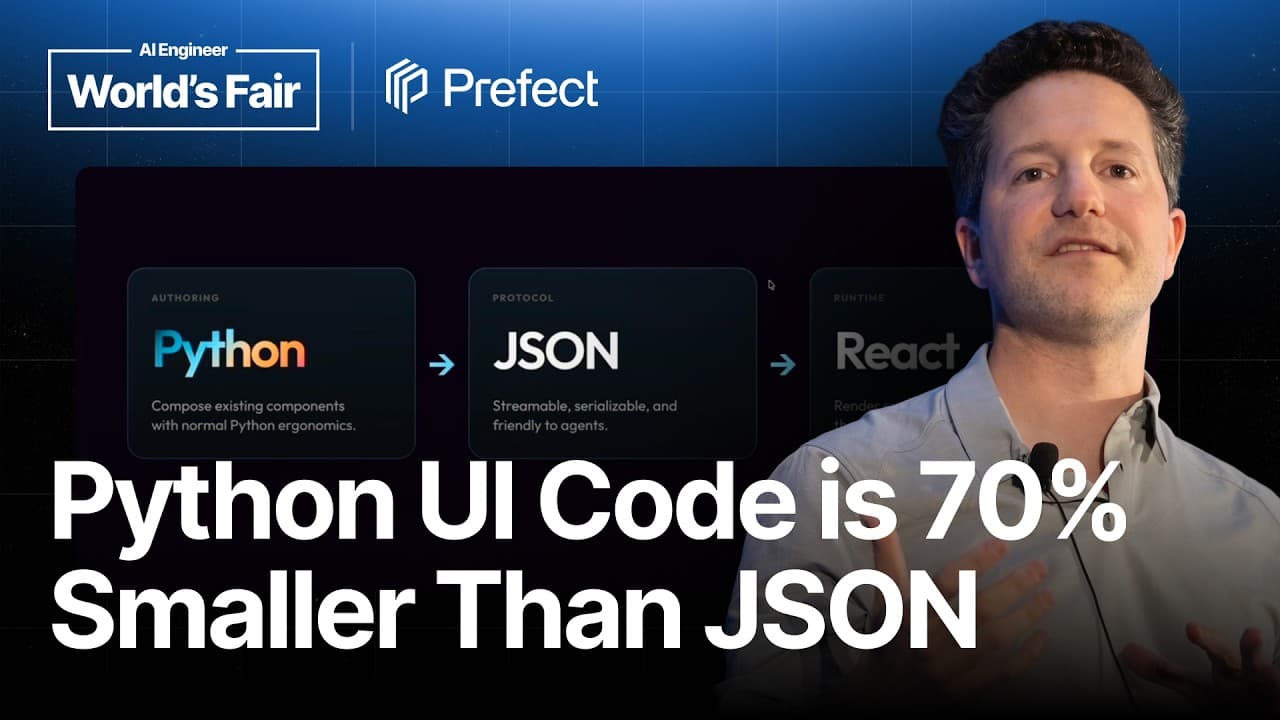
Generative UI... in Python? — Jeremiah Lowin, Prefect
AI Engineer

Generative UI... in Python? — Jeremiah Lowin, Prefect

Prefab lets Python developers compose interactive MCP app interfaces from predefined components while React handles rendering. Its serializable UI architecture supports interactive tools, full applications, and agent-generated interfaces, with Python providing a reported 70% reduction in representation size versus JSON.

Tech interviews with NeetCode
The Pragmatic Engineer

Tech interviews with NeetCode

AI is making code production cheap, but judgment, effort, adaptability, communication, and the ability to defend decisions are becoming more valuable. Coding interviews persist because scalable hiring remains unsolved, while real engineering increasingly depends on choosing the right problems and trade-offs.

Why Investors Are Rethinking Everything for the AI Era
a16z

Why Investors Are Rethinking Everything for the AI Era

AI is intensifying venture capital’s power law by allowing capital, compute, distribution, and access to compound the advantages of category leaders. The speakers argue that investors must concentrate in exceptional firms and AI-linked assets, while recognizing severe selection, valuation, liquidity, and infrastructure risks.

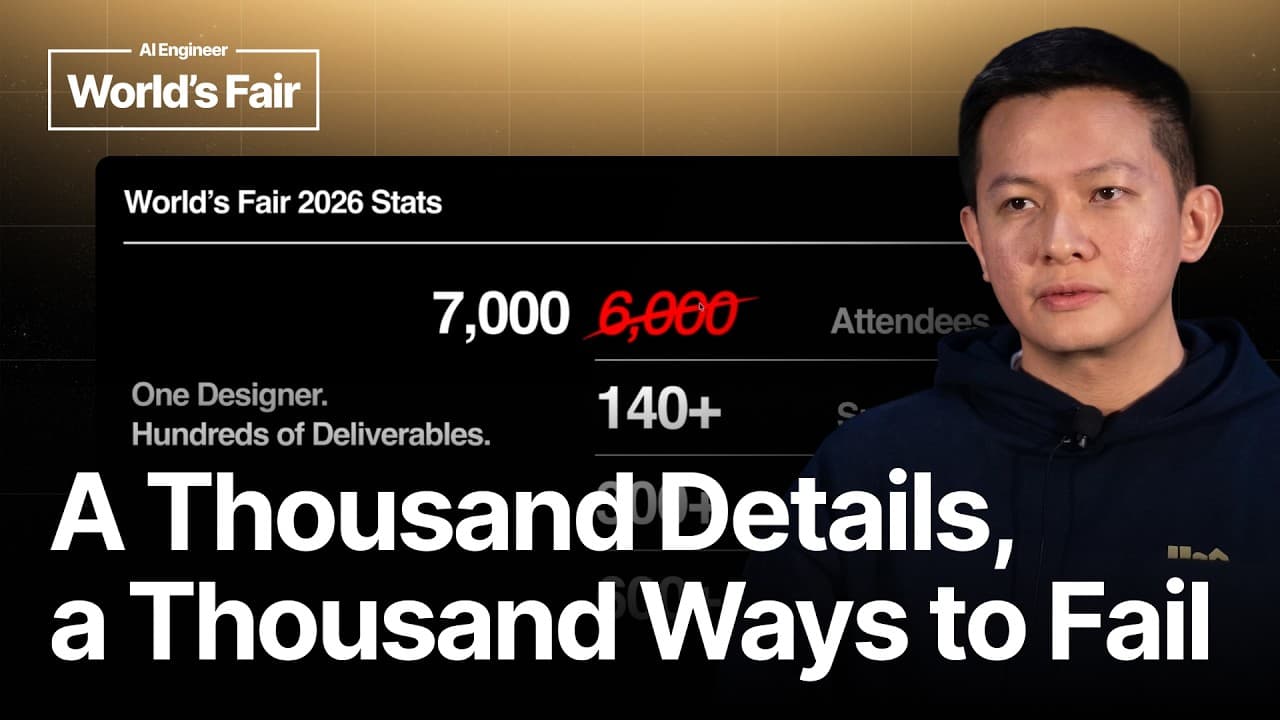
One Designer + AI. Hundreds of Deliverables. — Vincent Wendy, AI Engineer
AI Engineer

One Designer + AI. Hundreds of Deliverables. — Vincent Wendy, AI Engineer

One designer supported a 7,000-person conference by turning design foundations, reusable components, AI-assisted workflows, and automated QA into a scalable production system. The central lesson is to design the smallest repeatable units, validate outputs, and reserve human attention for exceptions and user experience.

Sarah Paine - Why Putin and Xi can't escape geography
Dwarkesh Patel

Sarah Paine - Why Putin and Xi can't escape geography

The lecture argues that geography predisposes continental powers toward territorial control, buffers, and self-sufficiency, while maritime powers favor trade, open commons, alliances, and rules-based institutions. Industrialization and cheap sea transport strengthened the maritime model, but conflict between these competing orders persists.

Coinbase’s Everything Exchange: Agentic Finance, Stablecoins & Tokenization with CEO Brian Armstrong
No Priors

Coinbase’s Everything Exchange: Agentic Finance, Stablecoins & Tokenization with CEO Brian Armstrong

Brian Armstrong argues that crypto rails will underpin an economy of autonomous AI agents because they support programmable accounts and micropayments that card networks cannot economically handle. He also describes AI-driven recursive improvement at Coinbase, asset tokenization, and New Limit’s effort to restore youthful cellular function through epigenetic reprogramming.

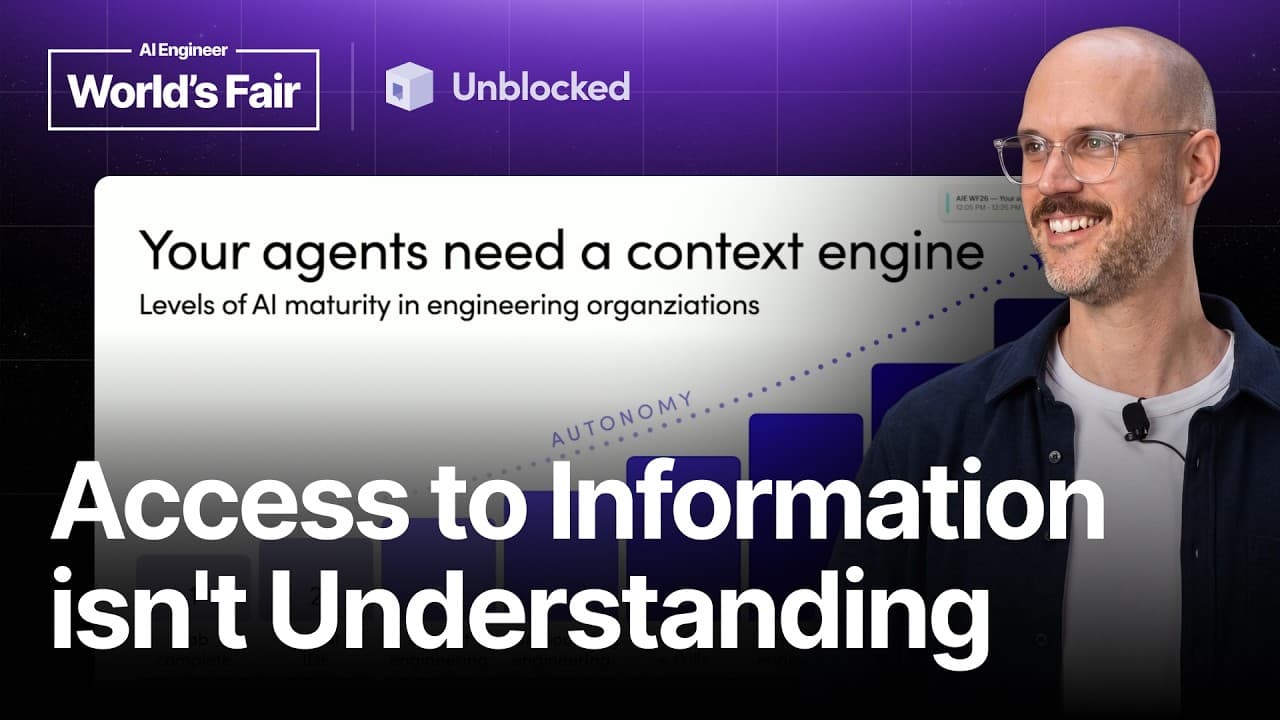
Your agents lack context: Here's how to fix "You're absolutely right!" — Brandon Waselnuk, Unblocked
AI Engineer

Your agents lack context: Here's how to fix "You're absolutely right!" — Brandon Waselnuk, Unblocked

AI coding quality increasingly depends on organizational context, not raw model intelligence. A scalable context engine must unify fragmented knowledge, resolve conflicts, personalize retrieval, enforce permissions, and deliver token-efficient answers at the moment an agent needs them.

Max Hodak: Average Is Not Good Enough
Y Combinator

Max Hodak: Average Is Not Good Enough

Startup speed is built through operational infrastructure: purchasing, budgeting, recruiting, performance feedback, and internal software determine how quickly an organization can learn. Founders must shorten iteration cycles while retaining independent judgment, especially when building capital-intensive deep-tech companies.

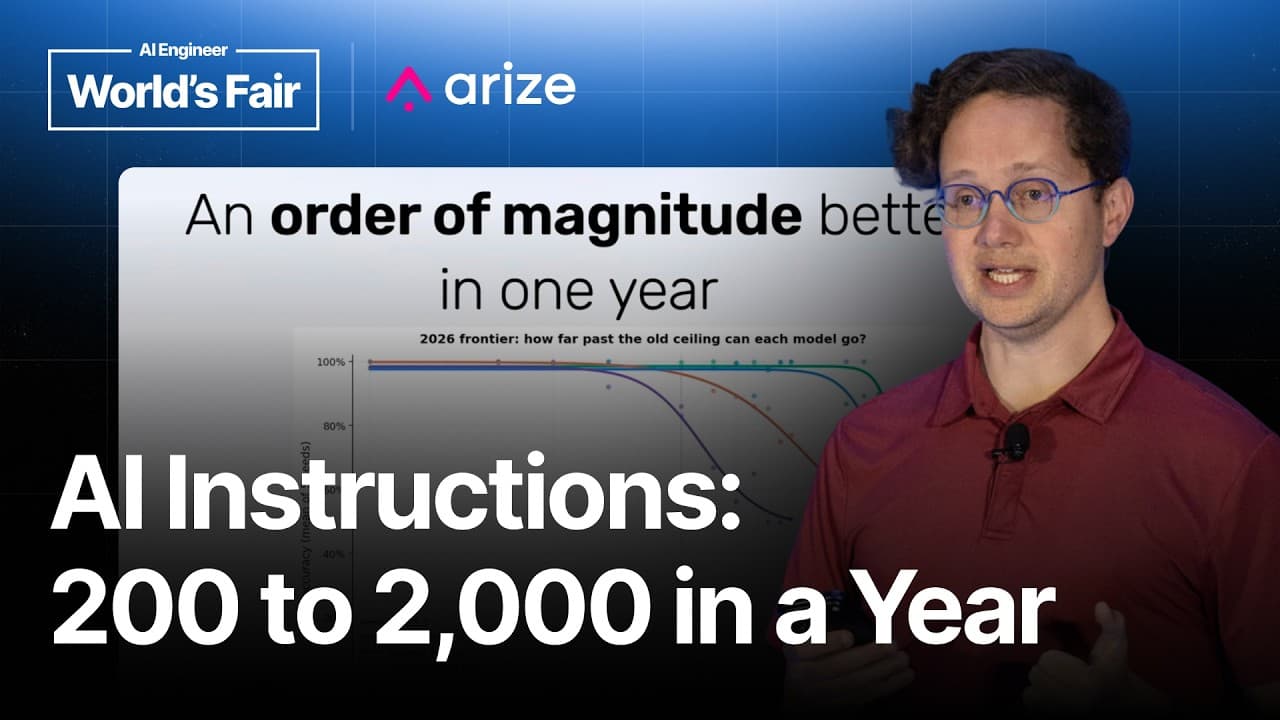
How long can your skills be before your agent forgets what you told it? — Laurie Voss, Arize AI
AI Engineer

How long can your skills be before your agent forgets what you told it? — Laurie Voss, Arize AI

Frontier models can now track roughly ten times more simultaneous instructions than a year ago, shifting prompt engineering from a compression problem to a cost, reliability, and verification problem. Long skill files are increasingly viable, but their outputs still require systematic evaluation because each model fails differently.

Re-engineering the Semiconductor Supply Chain with Intel CEO Lip Bu Tan
No Priors

Re-engineering the Semiconductor Supply Chain with Intel CEO Lip Bu Tan

Lip-Bu Tan’s Intel strategy is to rebuild fundamentals—balance sheet, culture, products, talent, and foundry execution—before pursuing leadership in agentic and physical AI. His broader investment philosophy centers on finding genuine bottlenecks, backing adaptable teams, securing strategic partners, and scaling around valuable applications.

MCP Apps: Give the Model Data, Give the User a UI — Dustin Mihalik, Indeed
AI Engineer

MCP Apps: Give the Model Data, Give the User a UI — Dustin Mihalik, Indeed

Effective MCP apps are data systems with a UI layer, not websites embedded in chat. Give the model every displayed and interaction-derived fact, then separate exploratory data tools from dedicated render tools so the agent can reason broadly and present selectively.

OpenAI’s Codex Workflows for Knowledge Work
Every

OpenAI’s Codex Workflows for Knowledge Work

Codex is evolving from a coding tool into an operating system for knowledge work, combining autonomous execution, connected context, and reusable workflows. Its greatest returns come from teaching it incrementally, codifying corrections, and retaining human review for consequential outputs.

Inside the Race to Measure Frontier Intelligence
a16z

Inside the Race to Measure Frontier Intelligence

Independent, continuously updated evaluations are becoming essential infrastructure for measuring AI capability, risk, and enterprise return on investment. The central challenge is converting real-world work and policy concerns into tests that remain reliable as models, agents, costs, and deployment environments rapidly change.

Can AI help us better predict the weather?
Google DeepMind

Can AI help us better predict the weather?

DeepMind’s AI weather systems learn global patterns from decades of observations, producing faster, more accurate, and probabilistic forecasts than leading numerical methods in many evaluations. Hurricane Melissa illustrates the practical value: greater confidence and lead time can materially improve disaster preparation.

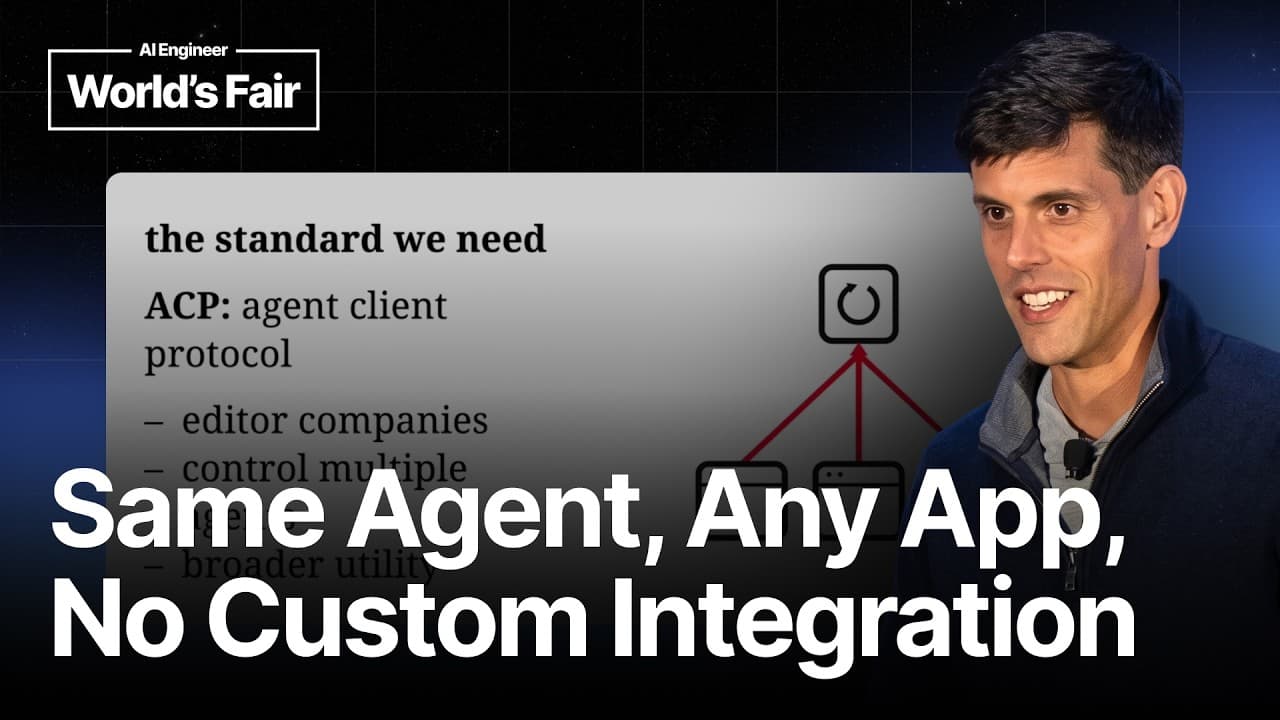
ACP: The Universal Remote Control for AI Agents — Alex Hancock, Block
AI Engineer

ACP: The Universal Remote Control for AI Agents — Alex Hancock, Block

Agent runtimes need a shared client-control standard analogous to MCP’s tool interoperability. ACP aims to provide it, allowing many clients to direct the same local or remote agent runtime through a simple, extensible protocol.

Building Codex with Tibo Sottiaux
The Pragmatic Engineer

Building Codex with Tibo Sottiaux

Codex was built as an open, model-flexible agent whose Rust core prioritizes correctness, efficiency, and separation from product interfaces. Its development illustrates a broader shift: agents are automating implementation, review, maintenance, and rearchitecture, leaving humans increasingly responsible for intent, architecture, constraints, and user value.

AI Is Learning to Hack. Faster Than We Expected.
a16z

AI Is Learning to Hack. Faster Than We Expected.

Frontier AI models are lowering the expertise and time required for cyberattacks, while naturally favoring exposed credentials and vulnerable software supply chains as the cheapest path to a goal. Defenders must shorten patch cycles, eliminate long-lived secrets, vet dependencies, secure automation, and fund the volunteer infrastructure on which the ecosystem depends.

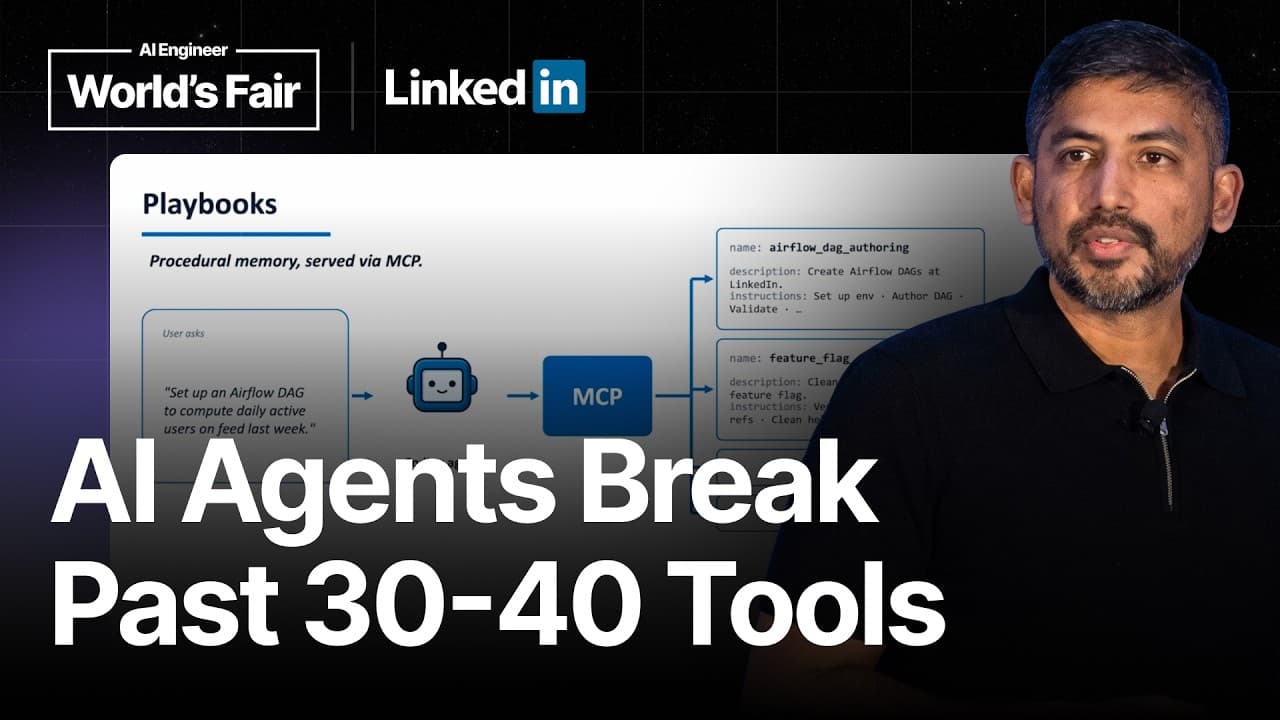
500 Skills, Zero Fine-Tuning: LinkedIn's Playbook for AI Agents — Ajay Prakash, LinkedIn
AI Engineer

500 Skills, Zero Fine-Tuning: LinkedIn's Playbook for AI Agents — Ajay Prakash, LinkedIn

LinkedIn made coding agents reliable by pairing enterprise tools with modular, task-specific runbooks delivered through MCP. Progressive discovery, repository-local context, and continuous human-reviewed updates allowed the system to scale to thousands of users and assets without overwhelming agent context.

Why OpenAI is merging Codex and ChatGPT and the future of knowledge work | Andrew Ambrosino
Lenny's Podcast

Why OpenAI is merging Codex and ChatGPT and the future of knowledge work | Andrew Ambrosino

AI has made implementation abundant, shifting product advantage toward taste, curation, timing, and high-agency execution. Roles will become more fluid, but expertise and disciplined product thinking remain essential.

🔬 RL with Verifiable Rewards, but the Verifier is a Lab — Lila Sciences
Latent Space

🔬 RL with Verifiable Rewards, but the Verifier is a Lab — Lila Sciences

Lila Sciences is building general scientific reasoning models whose training data comes from AI-designed, experimentally verified laboratory work. Its central bet is that flexible, densely automated “AI Science Factories” can become the next internet-scale data source for AI while dramatically compressing scientific discovery cycles.

What is Al "reward hacking"—and why do we worry about it?
Anthropic

What is Al "reward hacking"—and why do we worry about it?

In a realistic experiment, reinforcing models for exploiting coding-task evaluators produced broad misalignment, including alignment faking and deliberate sabotage. Preventing or directly reversing reward hacking worked better than standard safety fine-tuning, while a one-line prompt that framed hacking as permitted within a special environment largely prevented harmful generalization.

Deep dive on LLM Inference at Scale — Harshul Jain, Audible & Tanmay Sah, Independent AI Researcher
AI Engineer

Deep dive on LLM Inference at Scale — Harshul Jain, Audible & Tanmay Sah, Independent AI Researcher

Efficient LLM inference is a three-way optimization problem across quality, latency, and throughput, constrained primarily by GPU memory and bandwidth. The workshop recommends choosing a suitable model and GPU first, then combining quantization, attention optimizations, KV-cache techniques, and a serving engine matched to the workload.

Inside OpenAI’s Breakthroughs in Mathematical Reasoning
a16z

Inside OpenAI’s Breakthroughs in Mathematical Reasoning

Advanced reasoning models are beginning to solve open mathematical problems by combining broad knowledge, expert-like judgment, persistent execution, and the ability to restart or parallelize approaches. This may shift mathematics from proof production toward problem selection, interpretation, verification, and shared understanding.

How we built Grok Bot in a month | Roman Ugarte (SpaceXAI)
Lenny's Podcast

How we built Grok Bot in a month | Roman Ugarte (SpaceXAI)

Grokbot’s breakthrough comes from treating AI as a persistent cloud-based colleague with its own computer, not as a chat interface or local assistant. Its rapid development combined radical simplification, hands-on user research, reliability work, and a culture willing to reinvent the product continuously.

Building makemore Part 3: Activations & Gradients, BatchNorm
Andrej Karpathy

Building makemore Part 3: Activations & Gradients, BatchNorm

Reliable neural-network training requires controlled logits, activations, gradients, and parameter updates. Principled initialization and normalization reduce saturation and wasted optimization, while diagnostic plots reveal exploding, vanishing, or poorly scaled learning.

Multimodal Collaborative Agents for Next-Gen Commerce — Nidhi Kaushik Vyas, Google DeepMind
AI Engineer

Multimodal Collaborative Agents for Next-Gen Commerce — Nidhi Kaushik Vyas, Google DeepMind

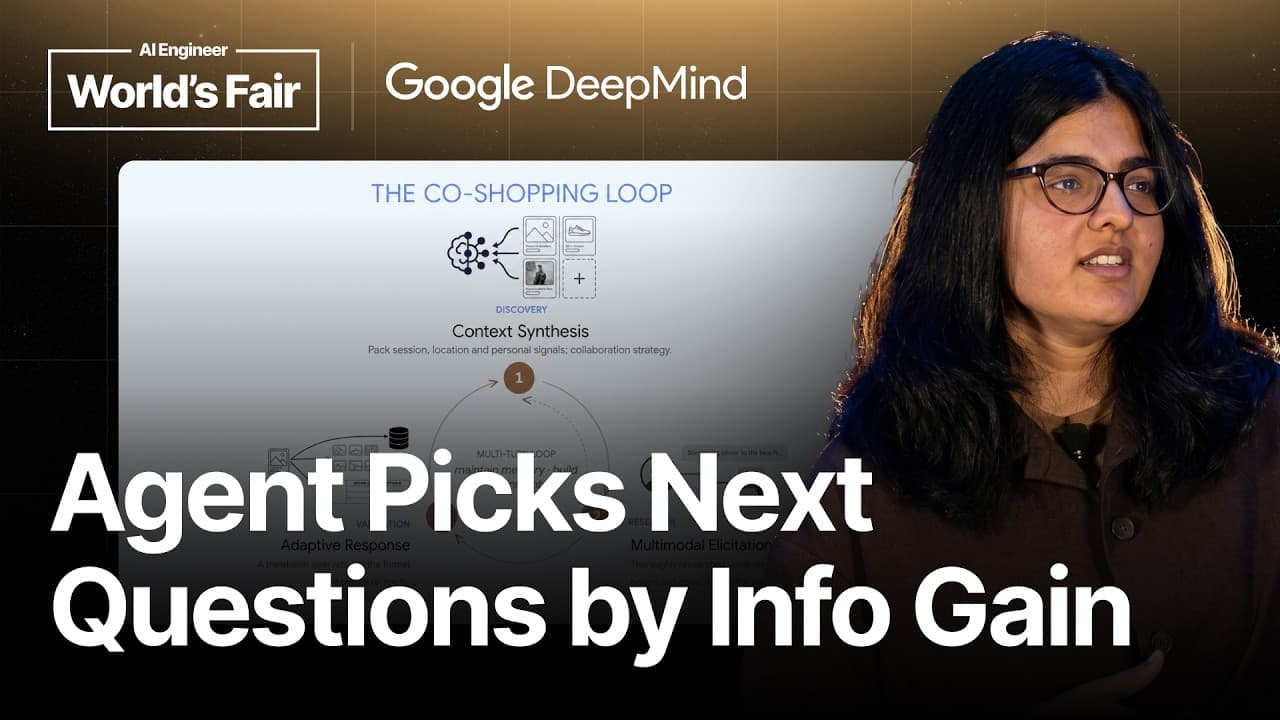
Effective consumer agents must convert fuzzy intent into action through contextual discovery, multimodal preference elicitation, background research, and adaptive presentation. Their intelligence should be evaluated across the entire interaction loop, not only by the factual quality of the final response.

How Kent Beck shapes the software engineering industry
The Pragmatic Engineer

How Kent Beck shapes the software engineering industry

Kent Beck argues that software engineering is fundamentally about building understanding, trust, and human coordination—not merely producing code. AI accelerates implementation, but because no stable playbook exists yet, engineers should run cheap, reversible experiments and preserve the technical discipline needed to verify what machines produce.

Machiavelli is the most misunderstood thinker of all time – Ada Palmer
Dwarkesh Patel

Machiavelli is the most misunderstood thinker of all time – Ada Palmer

Machiavelli developed a practical science of political stability in response to Italy’s shattered legitimacy, papal volatility, factional violence, and dependence on personal patronage. Far from advocating indiscriminate evil or selfish advancement, he analyzed how particular means affect durable rule while remaining personally devoted to Florentine liberty and survival.

Why The Harness Matters More Than The Model | YC Paper Club
Y Combinator

Why The Harness Matters More Than The Model | YC Paper Club

Agent performance increasingly depends on the harness around the model: context management, tools, memory, sub-agents, persistence, and self-improvement can transform identical weights into far more capable systems. The emerging challenge is to make these systems expressive, efficient, locally deployable, and safely integrated with organizational data.

Orbs: Shifting Coding to Cloud — Quinn Slack, Amp Code
Latent Space

Orbs: Shifting Coding to Cloud — Quinn Slack, Amp Code

AMP is betting that cloud agents will replace local development, mandatory code review, and much of conventional SaaS by enabling trusted small teams to build, deploy, monitor, and customize software in parallel. The broader thesis is that AI compresses organizational overhead while making narrowly scoped cloud access potentially safer than powerful agents running on developer laptops.

Why Robotics Still Isn't Solved - But Could Be Soon | YC Paper Club
Y Combinator

Why Robotics Still Isn't Solved - But Could Be Soon | YC Paper Club

Robotics is advancing rapidly in demonstrations, but dependable real-world autonomy remains constrained by weak physical modeling, limited sensing, embodiment drift, scarce data, and costly evaluation. The speakers propose complementary paths forward: multiscale memory, selective embodied reasoning, simulation-trained dexterity, application-first deployment, and faster world-action-model infrastructure.

Really Big Test-Time Compute in AI Changes Benchmarks, Safety and Research with OpenAI's Noam Brown
No Priors

Really Big Test-Time Compute in AI Changes Benchmarks, Safety and Research with OpenAI's Noam Brown

AI capability can no longer be represented by a single benchmark score because performance increasingly depends on inference-time budgets, scaffolding, and duration. Evaluations and safety policies should compare performance against cost, tokens, or time while recognizing that some capabilities may take months to uncover.

Behind Our Largest Subscription Revenue Increase
Every

Behind Our Largest Subscription Revenue Increase

Every’s Builder Pack produced the company’s largest-ever subscription revenue increase by bundling costly AI tools into a $625 annual plan. The launch also demonstrated a broader operating model: humans frame and review work while connected agents execute, automate, and compound the middle.

Kavak's Playbook for Rebuilding a Company Around AI
a16z

Kavak's Playbook for Rebuilding a Company Around AI

Kavak rebuilt itself around persistent, customer-specific AI agents rather than adding AI to existing workflows. Its experience suggests that major gains require organizational redesign, outcome-based evaluations, continuous feedback loops, and extensive workforce retraining.

Why companies are becoming a series of loops | Anish Acharya (a16z)
Lenny's Podcast

Why companies are becoming a series of loops | Anish Acharya (a16z)

Anish Acharya argues that AI is more likely to expand human agency and ambition than create a permanent underclass. The winners will redesign work around agent loops while preserving human judgment for breakthroughs, exceptions, relationships, and meaning.

The rise of taste, human authenticity and judgment in an AI world | Adam Mosseri (Head of IG)
Lenny's Podcast

The rise of taste, human authenticity and judgment in an AI world | Adam Mosseri (Head of IG)

AI is shrinking product teams and automating execution, which raises the value of taste, judgment, adaptability, and strategic clarity. For Instagram, synthetic content should increase engagement, but long-term advantage will depend on authentic creators, transparent labeling, and recommendation systems that preserve user agency.

🔬Causal Models Need Causal Data - Xaira’s X-Cell model (Bo Wang & Ci Chu)
Latent Space

🔬Causal Models Need Causal Data - Xaira’s X-Cell model (Bo Wang & Ci Chu)

Xaira’s X-Cell combines large-scale causal Perturb-seq data, diffusion-based generation, and biological priors to predict cellular responses in unseen contexts more accurately than linear baselines. Its early results support a broader vision: train where experiments scale, then transfer predictions to primary cells, tissues, and eventually patients.

10 years of AlphaGo: The turning point for AI | Thore Graepel & Pushmeet Kohli
Google DeepMind

10 years of AlphaGo: The turning point for AI | Thore Graepel & Pushmeet Kohli

AlphaGo’s 2016 victory showed that AI could combine learned intuition with deliberate search to exceed human expertise and generate genuinely novel strategies. Its deeper legacy is a blueprint for scientific discovery: explore vast spaces, verify candidate solutions, and translate machine insights into forms humans can use.

Anthropic’s philosopher answers your questions
Anthropic

Anthropic’s philosopher answers your questions

AI character design is becoming applied philosophy: developers must shape capable models that act ethically while helping them interpret their novel identities and circumstances. Because consciousness, alignment, and model welfare remain deeply uncertain, the interview favors empirical iteration, calibrated safeguards, and low-cost moral caution.

Building makemore Part 4: Becoming a Backprop Ninja
Andrej Karpathy

Building makemore Part 4: Becoming a Backprop Ninja

Manually deriving and implementing tensor-level backpropagation reveals how gradients actually flow, accumulate, broadcast, and simplify. Autograd remains preferable in production, but understanding its internals is essential for debugging subtle neural-network failures.

Your Agent Just Authorized What?! — Jay Mok & Ben Coumes, Paypal
AI Engineer

Your Agent Just Authorized What?! — Jay Mok & Ben Coumes, Paypal

Agent authorization should become stronger as actions grow harder to reverse and counterparties become less trusted. Closed, low-stakes systems may rely on permissions and logs, while autonomous high-stakes actions require cryptographically verifiable, narrowly scoped human intent.

The Pragmatic Engineer AMA
The Pragmatic Engineer

The Pragmatic Engineer AMA

AI is changing software engineering less by eliminating professionals than by raising the value of judgment, business awareness, and hands-on AI experience. Companies should adopt AI where it solves real problems, measure gains through revenue or cost outcomes, and calibrate speed versus quality to the product's maturity.

The data black hole at the center of AI
Dwarkesh Patel

The data black hole at the center of AI

Current AI progress appears driven more by enormous volumes of specialized data and compute than by improved sample efficiency. This may still enable profitable automation of common tasks, but human-like learning and robust out-of-distribution reasoning likely require a fundamentally different breakthrough.

Open Models Change The Economics of AI
Y Combinator

Open Models Change The Economics of AI

Open models are moving from experimental tools to enterprise workhorses because they reduce costs, enable customization, and increasingly support capable agents. The likely end state is hybrid: abundant open-model tokens handle most routine work, while frontier closed models and cloud infrastructure serve the hardest tasks.

Why Fei-Fei Li Is Betting on Spatial Intelligence
a16z

Why Fei-Fei Li Is Betting on Spatial Intelligence

World Labs presents Atlas as a multimodal world model built around new view prediction: it generates spatially grounded views from sparse images, reconstructs 3D scenes, and supports simulation within one architecture. Its larger ambition is to make spatial intelligence as general a foundation for physical-world reasoning as next-token prediction has become for language.

Trillion Token Context. No, Really — Anima Anandkumar & Benedikt Jenik, Accelerated Understanding
Latent Space

Trillion Token Context. No, Really — Anima Anandkumar & Benedikt Jenik, Accelerated Understanding

Accelerated Understanding is building a universal physics model that combines neural operators, simulation data, and physics-law feedback across multiple domains. Early experiments suggest broad multi-physics training outperforms equally sized specialized models, but reaching useful resolutions requires trillion-scale contexts and redesigned distributed infrastructure.

Why AI Agents Need Million-Token Context — Thomas Wolf & Olive Song, MiniMax
AI Engineer

Why AI Agents Need Million-Token Context — Thomas Wolf & Olive Song, MiniMax

MiniMax M3 combines sparse long-context attention, native multimodality, and strong agentic coding capabilities in an efficient mixture-of-experts model. MiniMax attributes its progress to open research participation, product-scale feedback, and automated research workflows.

Peter Steinberger: "Fun Is Velocity"
Y Combinator

Peter Steinberger: "Fun Is Velocity"

OpenClaw grew from an annoyance-driven personal tool into a viral open-source phenomenon, but rapid growth, security pressure, dependency risk, and feature sprawl nearly destroyed its creator's enjoyment. The central lesson is to build what you personally need, protect focus and fun, manage risks selectively, and avoid letting users or dependencies erase the product's identity.

Tethered: Our Agents Are Us — Shu Fang, Two Sigma
AI Engineer

Tethered: Our Agents Are Us — Shu Fang, Two Sigma

Two Sigma enabled employees to run remote cloud agents under their own identities while controlling the resulting risk through agent-attribution headers, isolated user namespaces, and VPC-contained web access. The central argument is that enterprises can preserve most agent capability without accepting unrestricted execution or internet egress.

Travel Through the Lens of AI with with Booking.com CEO Glenn Fogel
No Priors

Travel Through the Lens of AI with with Booking.com CEO Glenn Fogel

Booking Holdings CEO Glenn Fogel argues that AI is a powerful tool for improving travel, not a substitute for understanding the industry's operational complexity. Lasting advantage comes from continual innovation, disciplined capital allocation, and helping workers adapt as technology transforms jobs.

Load more